
Donald Trump accused Barack Obama of “treason,” claiming that he tried to undermine his first presidency by connecting him to suspected Russian election hacking. “They tried to steal the election,” Trump declared at the White House, alleging that Obama worked to undercut his 2016 triumph over Hillary Clinton. Obama’s spokesperson launched a rare reaction, calling Trump’s attack “a weak attempt at distraction”. Trump was referring to a report released last week by US Director of National Intelligence Tulsi Gabbard, which accused Obama and his national security team of a “years-long coup against President Trump” – conclusions that Democrats have branded bogus.
Trump’s comments on Tuesday came as he faced questions from reporters about late sex offender Jeffrey Epstein, who committed suicide in jail in 2019 while awaiting trial. The president’s administration has faced pressure to reveal more information about the well-connected convicted paedophile. US House Speaker shuts down chamber to prevent Epstein vote. “The witch hunt that you should be talking about is they caught President Obama absolutely cold,” Donald Trump told the media. “It’s time to go after people, Obama’s been caught directly,” he told reporters.”He is guilty. This constituted treason. “This was every word you could think of,” Trump stated.
His remarks occurred when he hosted Philippine President Ferdinand Marcos Jr. in the Oval Office. Patrick Rodenbush, Obama’s spokesman, responded: “Out of respect for the office of the presidency, our office does not normally dignify the constant nonsense and misinformation flowing out of this White House with a response.” However, these claims are terrible enough to justify one. These odd charges are absurd and a poor attempt at distraction.”
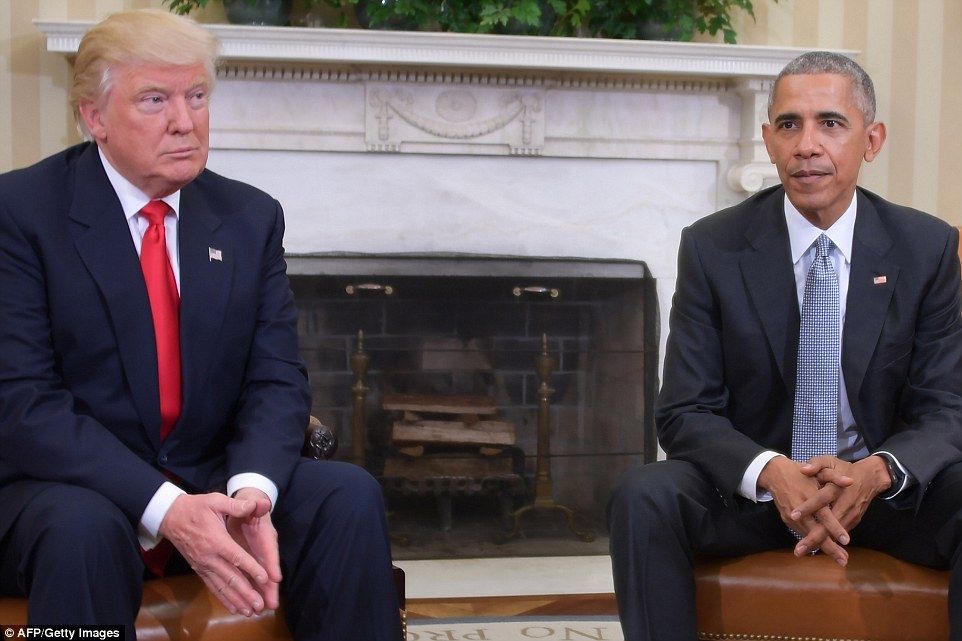
The Office of the Director of National Intelligence released declassified emails between Obama advisers on Friday, claiming they had withheld intelligence assessments suggesting Russia had failed in its attempts to infiltrate US election systems. A declassified copy of the president’s daily briefing, prepared by US security service chiefs for Obama weeks after Trump defeated Clinton and dated December 8, 2016, stated: “We assess that Russian and criminal actors did not impact recent US election results by conducting malicious cyber activities against election infrastructure.” However, the FBI disagreed with the findings it had initially co-authored, and a meeting with top officials was conducted at the White House the next day, according to the article.
Following that, an adviser to then-Director of National Intelligence James Clapper emailed intelligence leaders, requesting that they draft a new assessment “per the president’s request” documenting the “tools Moscow used and actions it took to influence the 2016 election”. Gabbard claimed the emails revealed a “treasonous conspiracy” to harm Trump, and she threatened to refer Obama administration officials to the Justice Department for prosecution. However, Obama’s spokesman stated on Tuesday that “nothing in the document issued last week undercuts the widely accepted conclusion that Russia worked to influence the 2016 presidential election but did not successfully manipulate any votes.”
In January 2017, the US intelligence community released an assessment concluding that Russia had attempted to harm Clinton’s campaign and boost Trump in the three months preceding the election. US officials discovered that this effort included Russian bot farms on social media and hacking of Democratic emails, but they concluded that the impact was likely limited and did not change the election outcome. The Senate intelligence committee’s 2020 bipartisan report also revealed that Russia attempted to assist Trump’s 2016 campaign. Secretary of State Marco Rubio, a senator at the time, was among the Republicans who signed the report.
The first two years of Trump’s presidency were overshadowed by his own Justice Department’s investigation into whether he collaborated with Russia to influence the 2016 election outcome. The resulting Mueller investigation found no proof that Trump or his campaign colluded with the Kremlin, and no one was ever charged with such offences. The Durham report, a subsequent special counsel investigation, determined that the original FBI probe lacked “analytical rigour” and relied on “raw, unanalysed, and uncorroborated intelligence”.

 English