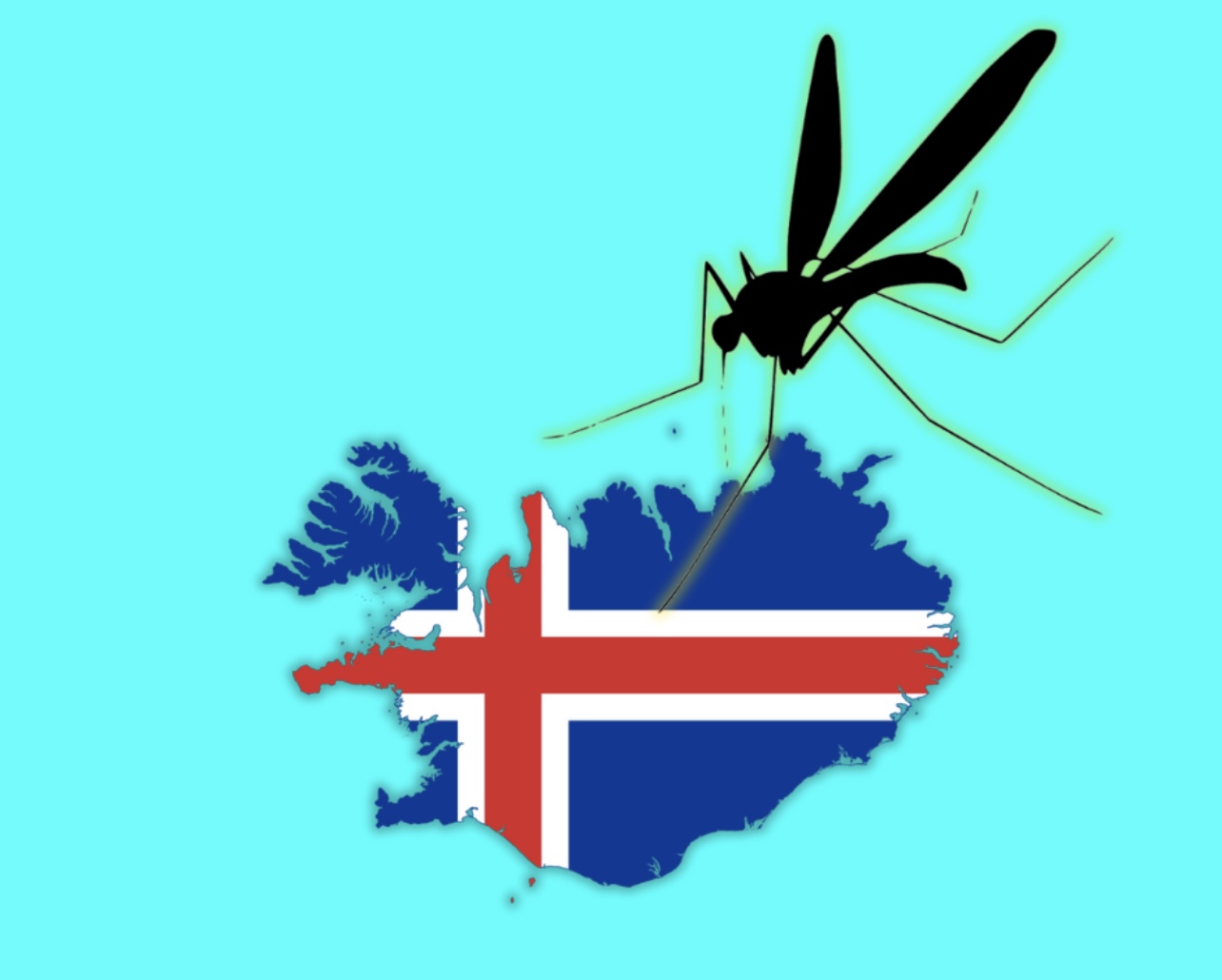
For the first time in recorded history, mosquitoes have been discovered in Iceland, a country previously renowned for its mosquito-free status. This unprecedented occurrence is attributed to the nation’s record-breaking heatwaves and the accelerating impacts of climate change.
In mid-October 2025, citizen scientist Björn Hjaltason identified three mosquitoes—two females and one male—of the species Culiseta annulata in Kjósarhreppur, near Reykjavík. These insects were found on red wine-soaked ropes used to attract moths, a method commonly employed by entomologists. The specimens were later confirmed by entomologist Matthías Alfreðsson at the Natural Science Institute of Iceland.
Culiseta annulata is a cold-resistant species typically found in other parts of Europe. While not known to transmit diseases to humans, its presence in Iceland signifies a notable shift in the region’s ecological dynamics. Experts suggest that the warming climate may be creating conditions conducive to the survival and potential establishment of mosquito populations in areas previously inhospitable to them.
Iceland’s climate has been warming at approximately four times the rate of the global average, leading to significant environmental changes, including glacier retreat and shifts in local biodiversity. The 2025 European heatwaves, which affected multiple countries, also contributed to the rise in temperatures across the Nordic region.
While the immediate implications of this discovery are still being assessed, scientists are monitoring the situation closely. The arrival of mosquitoes in Iceland serves as a stark reminder of the far-reaching effects of climate change on ecosystems worldwide.



 English