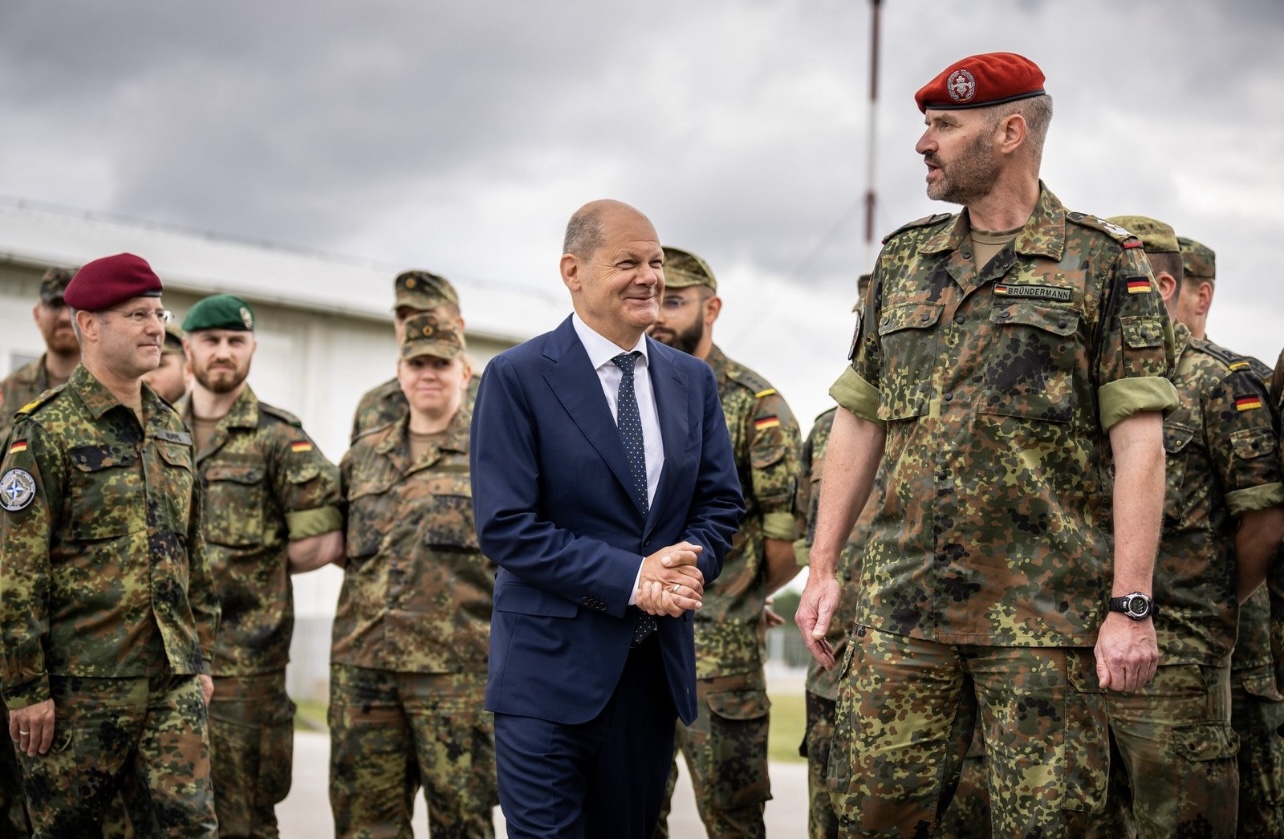
Germany’s government has reached a landmark agreement on a new military-service law aimed at strengthening the Bundeswehr at a time of growing security tensions in Europe. Rather than fully reintroducing conscription, officials have settled on a more flexible system that leans first on voluntary service — while keeping the option of mandatory service open if volunteer targets are not met.
Under the draft legislation, every German man who turns 18 will, starting in 2026, be required to register by completing a detailed questionnaire that asks about their interest in serving, their fitness, education and other personal qualifications. Although women will also be invited to fill out the questionnaire, participation on their part is voluntary. This measure is designed to re-create a central register of potential recruits, which Germany has lacked since it suspended conscription in 2011.
After registering, suitable candidates will be invited to attend a medical examination. According to the current plan, from mid-2027 these health checks will become mandatory for all 18-year-old men, regardless of whether they ultimately choose to serve. The new law envisions a core period of service that lasts six months, though recruits will have the option to extend for up to 23 months if they wish.
Those who complete the service will automatically join the reserves, helping the Bundeswehr to build a much larger trained reserve force. The government hopes this model will bring tens of thousands more into uniform: its long-term goal is to grow active personnel to around 260,000, with a sizeable reserve component alongside.
Incentives have been built into the plan to make the service more attractive to young people. Recruits will receive better pay, and the proposal includes benefits such as free accommodation, travel, medical care, as well as subsidised training opportunities — for example to earn a driving license or train in technical military roles.
Although participation in this new service model is formally voluntary, defence officials have not ruled out a return to mandatory conscription if volunteer numbers fall short. The framework includes a “fallback” mechanism, requiring a separate parliamentary vote to trigger compulsory service if needed in the future. According to Defence Minister Boris Pistorius, this mechanism is a safeguard rather than the preferred path, reflecting the government’s ambition to rely primarily on motivated volunteers.
The urgency behind these reforms traces back to increasing pressure on NATO members to contribute more to collective defence. Germany, in particular, has faced criticism for stagnant troop numbers even as its security environment has shifted. Chancellor Friedrich Merz has publicly stated his intention to build a “strong conventional army,” and defence officials argue that boosting personnel is just as important as purchasing advanced equipment.
The plan has sparked a lively political debate. While many welcome the return of a structured link between society and the military, others remain wary of sliding back toward compulsory service. Civil-liberties advocates warn that mandatory registration and health screenings could be a slippery slope, and some conservative voices argue that the fallback provision could be triggered too easily. On the other hand, proponents argue that the new model is a pragmatic compromise, offering a socially acceptable way to rebuild Germany’s defence capacity without fully reviving the draft.
If approved by parliament, the law is expected to take effect from January 2026. Defence planners hope that the first wave of questionnaires will go out soon after, and that the first cohort of volunteers will begin their service by mid-2026. Longer term, officials hope the reform will serve Germany’s strategic ambitions: a more professional, larger and resilient military force that can respond credibly to future threats while sustaining a substantial reserve.



 English