Widespread violence has erupted across Bangladesh following the death of Sharif Osman Hadi, a prominent youth leader of the country’s 2024 pro-democracy student movement. Hadi, 32, was shot by masked assailants on December 12 while leaving a mosque in Dhaka and was later flown to Singapore for medical treatment. He succumbed to his injuries on Thursday, sparking an immediate wave of anger and large-scale protests across the nation.
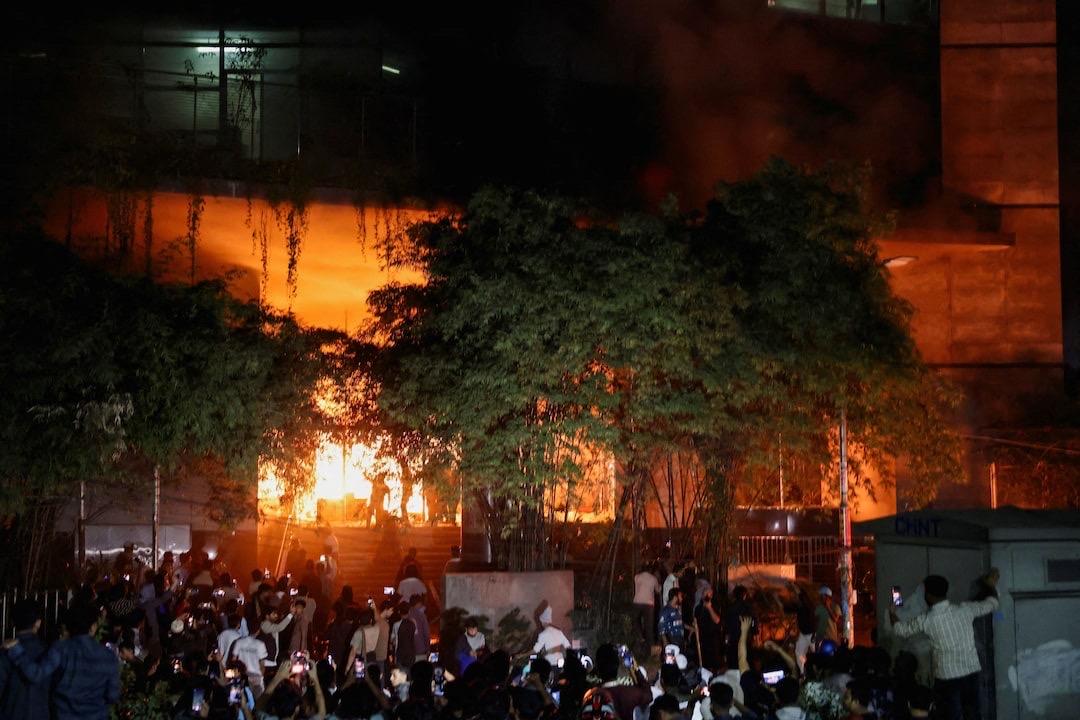
Thousands of demonstrators took to the streets of Dhaka and other major cities, demanding justice and the arrest of those responsible. What began as peaceful demonstrations quickly escalated into violent clashes with security forces. Paramilitary units were deployed throughout the capital in an effort to restore order. In Dhaka, several major buildings, including the offices of leading newspapers Prothom Alo and The Daily Star, were set ablaze, halting their printing presses for the first time in history. Journalists inside were reportedly trapped before being rescued by authorities.
Hadi was a spokesperson for Inqilab Mancha, a youth platform that played a central role in the movement that led to the ousting of former Prime Minister Sheikh Hasina in 2024. He was also preparing to run for parliament in the February 2026 elections. Supporters view his death as a symbolic blow to the pro-democracy movement and a potential flashpoint in an already tense political environment. The interim government, led by chief adviser Muhammad Yunus, declared a national day of mourning and urged citizens to remain calm, while facing criticism for not preventing the violence.
Beyond clashes with security forces, protesters targeted institutions perceived to be aligned with political opponents or foreign interests, including media outlets and, in some reports, diplomatic premises. Anti-India sentiment was also evident in some demonstrations, reflecting broader regional tensions linked to Bangladesh’s shifting political landscape. The attacks on media houses and the threats to press freedom have drawn international condemnation, raising concerns about civil liberties, freedom of expression, and the safety of journalists.
The death of Sharif Osman Hadi has acted as a catalyst for significant social and political upheaval in Bangladesh. As the nation navigates this period of unrest, the events will likely have lasting implications on the country’s political trajectory in the lead-up to the crucial national elections next year.


 English