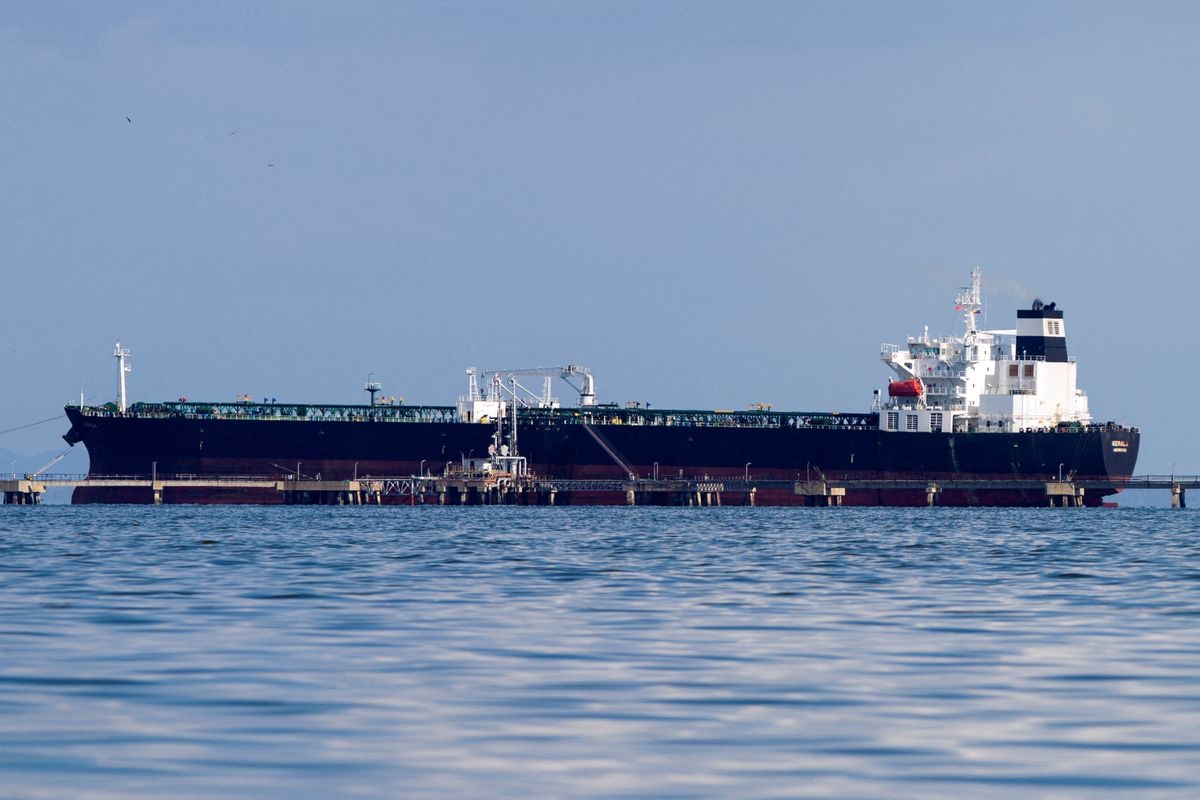
The United States has officially started selling Venezuelan oil, marking a historic development in both energy markets and U.S.–Venezuela relations, according to multiple news outlets. The first tranche of exports, valued at approximately $500 million, has been completed under a broader energy agreement between Caracas and Washington, officials said.
A senior U.S. official confirmed that this initial sale of Venezuelan crude is part of a roughly $2 billion deal. Revenue from this first batch is being held in bank accounts controlled by the U.S. government, with Qatar chosen as a neutral location to oversee the funds and prevent seizure by other parties. Additional sales are expected in the coming days and weeks. White House sources also confirmed that the first sale has been completed, with further transactions anticipated soon.
This move comes amid intense geopolitical developments between the two nations. In early January, the United States launched a military operation that resulted in the ousting of Venezuelan President Nicolás Maduro. The installation of an interim government in Caracas enabled rapid negotiations over control and export of the country’s vast oil resources. Under the current arrangements, Venezuela has agreed to release millions of barrels of oil, with initial estimates ranging between 30 million to 50 million barrels, for sale by the United States. President Donald Trump later outlined plans to oversee and market Venezuela’s crude, emphasizing economic benefits for American refineries and strategic leverage over regional energy supplies.
Industry analysts say the return of Venezuelan crude to global markets could reshape heavy crude pricing dynamics. Certain grades of Venezuelan oil, such as Merey‑16, are being offered at competitive discounts compared with other heavy oils, including Canada’s West Canadian Select, making them particularly attractive for U.S. Gulf Coast refiners.
The U.S. decision has also provoked diplomatic tensions. China, one of Venezuela’s largest oil customers prior to recent U.S. interventions, sharply criticized the move as a violation of Venezuelan sovereignty, calling it contrary to international law and harmful to the rights of the Venezuelan people. At the same time, the U.S. government has indicated its intention to control Venezuelan oil sales indefinitely, framing the move as a long-term strategy to stabilize production, benefit U.S. energy interests, and channel revenue back into Venezuela — a claim met with skepticism by some energy executives and international observers.
Additional Venezuelan oil shipments and sales are expected in the coming weeks, as Washington markets supplies and potentially encourages U.S. oil companies to invest in Venezuela’s energy infrastructure. Traders and refiners will closely monitor how Venezuelan oil competes with other heavy crude grades in global markets, while international observers watch for further diplomatic repercussions, particularly with China and other oil importers of Venezuelan crude.



 English