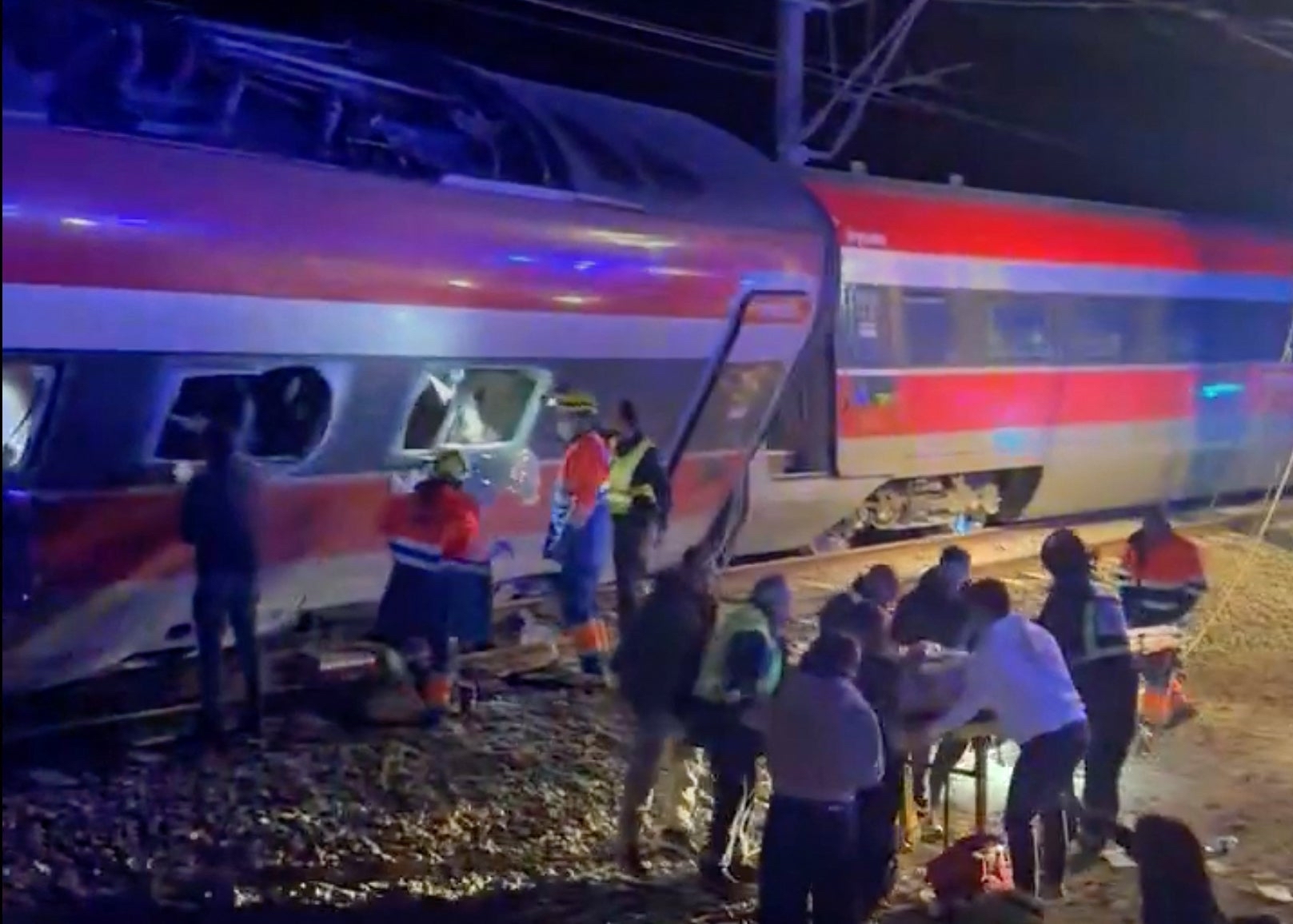
A devastating high-speed train crash in southern Spain has killed at least 39 people and left many more injured, authorities confirmed as rescue workers continued recovery efforts. The collision occurred on the evening of January 18, 2026, near the town of Adamuz in Córdoba province when a high-speed Iryo service traveling from Málaga to Madrid derailed and veered across onto the opposite track, striking an oncoming Renfe train bound for Huelva. The impact was catastrophic, throwing carriages off the tracks and causing severe destruction along the line.
Officials said the crash happened at around 7:45 p.m. local time, with emergency services working through the night to reach survivors amid twisted wreckage and difficult terrain. Initial reports put the casualty count far lower, but as search and rescue operations progressed, the death toll climbed to at least 39, and authorities warned it could rise further as recovery continues. More than a hundred passengers were injured, with dozens in serious condition, and many remain hospitalized.
The tragedy has brought shock and sorrow across Spain, with Prime Minister Pedro Sánchez canceling his scheduled travel to visit the crash site and pledging a full and transparent investigation into the causes of the accident. Officials have described the crash as highly unusual, noting it took place on a straight, recently renovated section of track, and have thus far ruled out human error as the likely primary factor while forensic teams work to determine whether infrastructure or mechanical failure played a role.
Spanish Interior Minister Óscar Puente expressed deep sympathy for the victims and gratitude to the rescue teams, highlighting the extraordinary difficulty of the emergency response in the rural area where the collision occurred. Rail services on the affected line have been suspended, and authorities are calling for DNA samples from relatives to help identify the victims as recovery work continues. The accident ranks among Spain’s deadliest rail disasters in recent decades and has prompted national mourning and urgent questions about rail safety and infrastructure.



 English