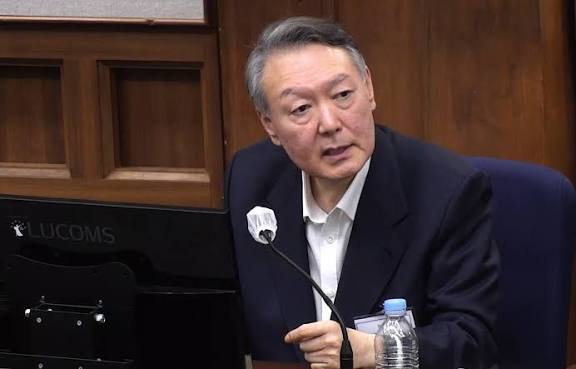
Former South Korean President Yoon Suk-yeol was convicted this week of leading an insurrection tied to his abrupt declaration of martial law in December 2024, a dramatic episode that plunged the country into its most serious political crisis in decades. Prosecutors had argued that his actions undermined the constitutional order so severely that he deserved the death penalty, but on 19 February 2026 a Seoul court instead handed him life imprisonment.
The case centered on Yoon’s decision to impose martial law on 3 December 2024, ordering military and police forces to surround the National Assembly as part of an attempt to break political gridlock with the legislature. Lawmakers quickly repealed the emergency decree after just a few hours, and massive public protests erupted across the country.
Special prosecutors had sought the death penalty, arguing that Yoon’s use of emergency powers and mobilisation of security forces amounted to an unlawful insurrection intended to paralyze parliament and seize control of government functions. Under South Korean law, leaders of an insurrection can be punished either with death or life imprisonment, but the country has not carried out executions since 1997 and capital punishment is effectively under a moratorium.
In sentencing Yoon to life in prison, judges cited his age, long record of public service and the absence of extensive planning or extensive bloodshed. The Seoul Central District Court found that although his actions constituted insurrection by seeking to disrupt constitutional processes, they did not rise to the most extreme level of violence envisaged under the law.
Outside the court, hundreds of Yoon’s supporters clashed verbally with critics as they reacted to the verdict. Some called for harsher punishment, while others insisted Yoon had acted out of concern for government dysfunction and urged continued legal appeals.
Alongside Yoon, several senior military and police officials who aided in enforcing the brief martial law were also convicted. Former Defence Minister Kim Yong-hyun received a 30-year prison sentence, and other high-ranking officials received lengthy terms for their roles in the failed effort.
Yoon was impeached by the National Assembly in December 2024 and removed from office by the Constitutional Court in April 2025. He has been in custody since July 2025 while facing multiple related criminal trials. In an earlier separate case, Yoon was sentenced to five years for resisting arrest and related charges, a verdict he is also appealing.
Observers say the trial and verdict underline South Korea’s robust democratic institutions, showing that even former heads of state can be held accountable under the law. The decision not to impose the death penalty reflects both legal traditions and international human rights concerns, even as domestic debate continues over how best to respond to crises of constitutional order.
 English