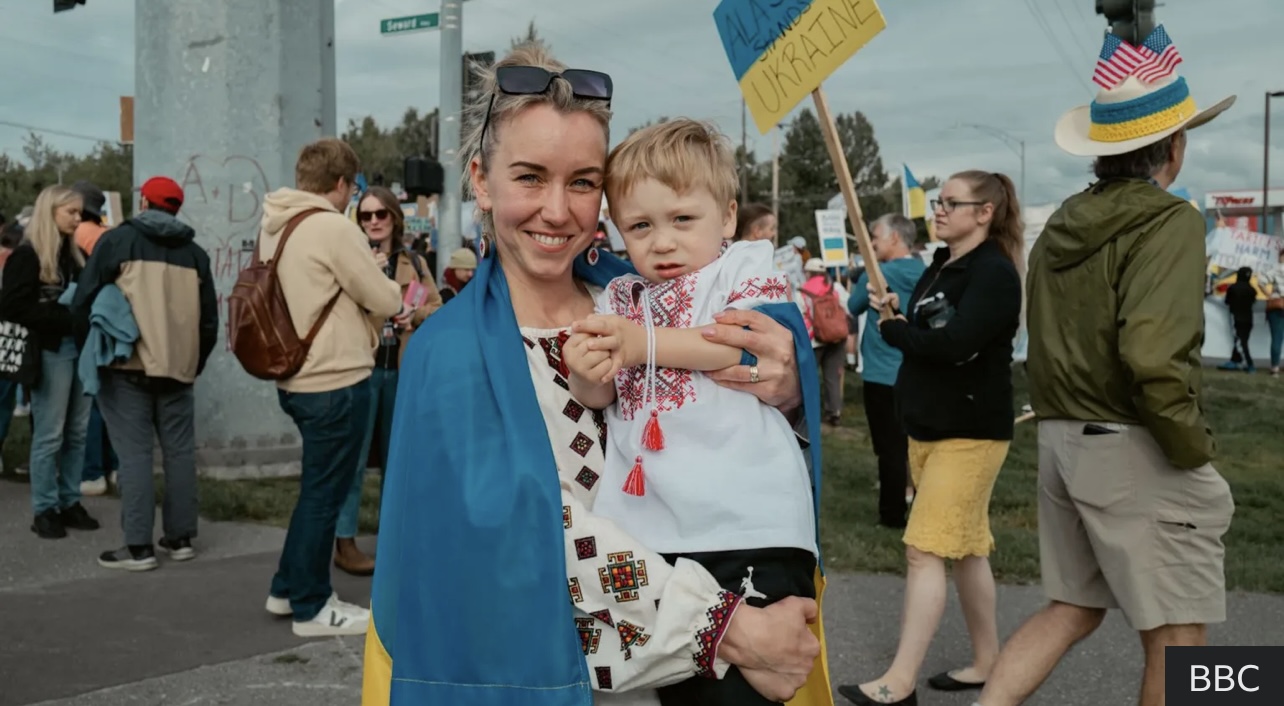
“Putin is supposed to be in jail, and he just comes to Alaska like that.” Hanna Correa is among a sea of Alaskans waving Ukrainian flags on the trip to Anchorage. “When I came through the parking lot, and I see a lot of Americans, they’re supporting, it made me cry,” she recounts.” Ms Correa, 40, left Ukraine in 2019 for love, and six years later, the fate of her nation could be decided in her adopted hometown. US President Donald Trump and his Russian counterpart Vladimir Putin are scheduled to arrive at Joint Base Elmendorf-Richardson, about a 30-minute drive away. Volodymyr Zelensky, the leader of Ukraine, has not been invited, which Ms Correa describes as “pretty sad”.
Christopher Kelliher, a 53-year-old military veteran and Alaska native, is among those protesting their entrance. “It’s gross, it makes you want to take a shower,” he adds about the meeting. “Putin does not need to be in our state, let alone our country. We have an idiot in the White House who will grovel to this man.”
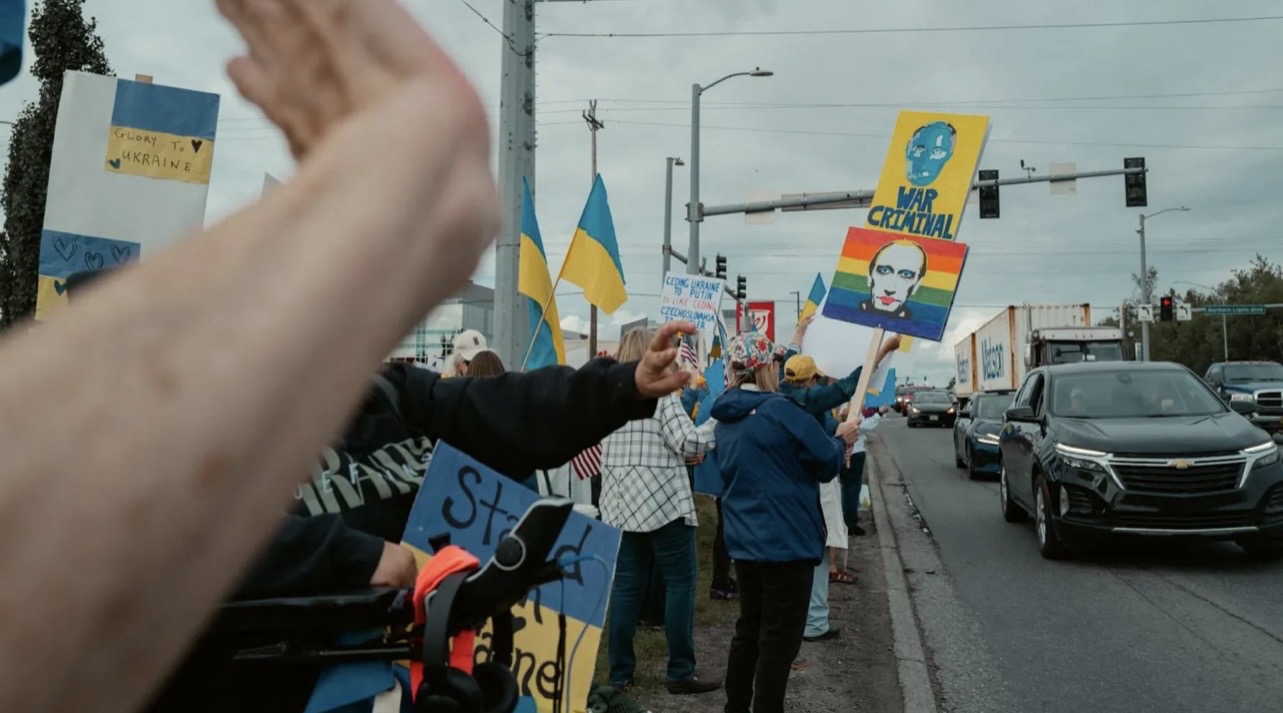 Hundreds lined a street in Anchorage on Friday to oppose Putin’s arrival
The region’s history with Moscow adds to the gravity of Friday’s conference. In 1867, the United States paid $7.2 million to purchase Alaska from Russia. Critics dubbed the purchase “Seward’s Folly” – after William Seward, the US secretary of state at the time – claiming that the region was little more than a frozen tundra. However, further discoveries of rare earth minerals and plentiful oil and gas disproved that classification. Ornate churches are among the most conspicuous reminders of Alaska’s Russian history. Anchorage’s St. Tikhon Orthodox Church has held three days of prayer in preparation for the coming of leaders.
Priest Nicholas Cragle, an American who recently moved to Alaska after living in Russia for seven years, says the conflict is “particularly painful and close to the hearts” of parishioners.
“We’re hoping that this meeting will lead to something… lead to a culmination of this conflict,” says Mr Cragle.

That sentiment is echoed by anglers ankle-deep in a creek bed on the outskirts of town, lured to the area by the appeal of some of the world’s best salmon. “I think it’s a good idea [the summit], and I wish Zelensky would be out here too… get this thing over with,” says Don Cressley, who lives in North Pole, Alaska, and is visiting on a fishing trip with his grandson. He is seeking a cease-fire “because of the destruction they’re doing to all the cities, all the buildings, making everybody more homeless, taking their foods away, their supplies away, their living right away,” . Trump, he claims, is doing a “awesome job” in cease-fire talks.

While the US president often talks warmly of his relationship with Vladimir Putin, superpower tensions persist and are more keenly felt here.
Moscow’s military planes are routinely detected flying near the coast of Alaska. And in January, Canadian and American fighter jets were scrambled after multiple Russian jets were spotted in the Arctic, according to the North American Aerospace Defence Command.
That breeds a sense of unease for some Alaskans who live closer to Russia than Washington DC.
“Although the Cold War is over between Russia and the US, they’re constantly patrolling our airways,” Anchorage resident Russell Wilson tells me while fishing.
“If the president doesn’t put the hammer down, we could be the next Ukraine.” Others in Alaska, on the other hand, believe that a return to Cold War conflicts is a pipe dream. I ask Army veteran Christopher Kelliher if he’s afraid about a Russian invasion. “Not really, everybody in Alaska owns a gun,” he says.


 English