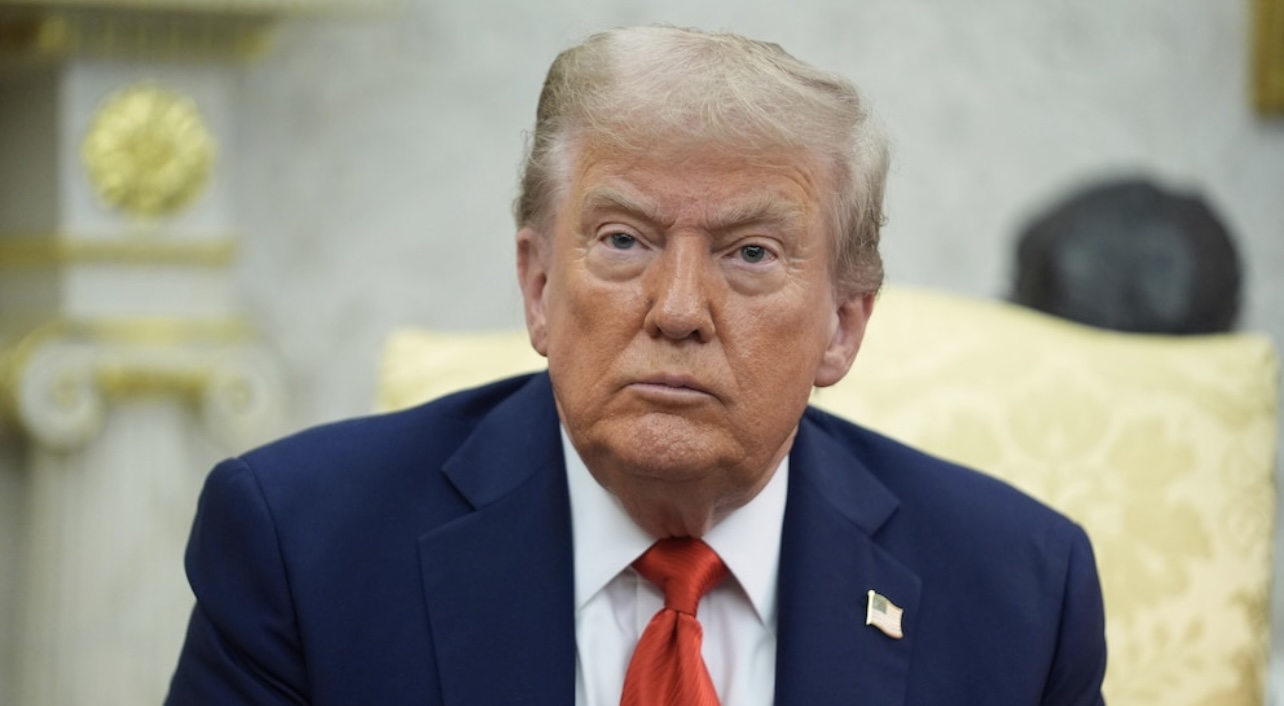
Former President Donald Trump has asked the U.S. Supreme Court to uphold his controversial emergency tariffs, setting up a high-stakes legal battle that could redefine the scope of presidential trade powers.
The appeal follows a recent ruling by the U.S. Court of Appeals for the Federal Circuit, which struck down the tariffs in a 7–4 decision. The court held that Trump overstepped his authority under the International Emergency Economic Powers Act (IEEPA), emphasizing that only Congress holds the constitutional power to impose tariffs. Judges cited the Supreme Court’s “major questions” doctrine, which requires clear congressional authorization for sweeping executive actions.
The tariffs, imposed in early 2025 under Trump’s renewed economic agenda, placed a 10 percent baseline levy on most imports, with higher “reciprocal” rates applied to goods from countries such as China, Canada, and Mexico. The administration argued that the measures were necessary to protect U.S. industries and strengthen national security, but critics ranging from small import businesses to state governments said the tariffs were unconstitutional and economically damaging.
Despite the appeals court ruling, the tariffs remain temporarily in force. Enforcement is set to lapse by mid-October unless the Supreme Court intervenes. In an emergency petition filed this week, Solicitor General D. John Sauer urged the justices to fast-track the case, warning that uncertainty over the policy threatens ongoing trade negotiations and financial stability. The administration has requested oral arguments as early as November.
Trump has framed the legal showdown as a test of presidential strength. In a recent rally, he insisted that “a president must have the power to defend American jobs,” portraying the court fight as central to his broader economic nationalist platform.
Meanwhile, small businesses and consumer groups continue to press their case against the tariffs, saying they have faced higher costs and supply chain disruptions. Attorneys representing the challengers argue that the executive branch cannot bypass Congress in matters of taxation and trade.
The outcome could have sweeping implications. If the Supreme Court strikes down the tariffs, the administration may be forced to refund tens of billions of dollars already collected. If it rules in Trump’s favor, it could expand presidential authority in setting trade policy without congressional approval.
As the case heads toward the nation’s highest court, the stakes extend well beyond Trump’s political fortunes. The decision could reshape the balance of power between the executive and legislative branches, while also charting the course of America’s economic future in an increasingly volatile global trade environment.


 English