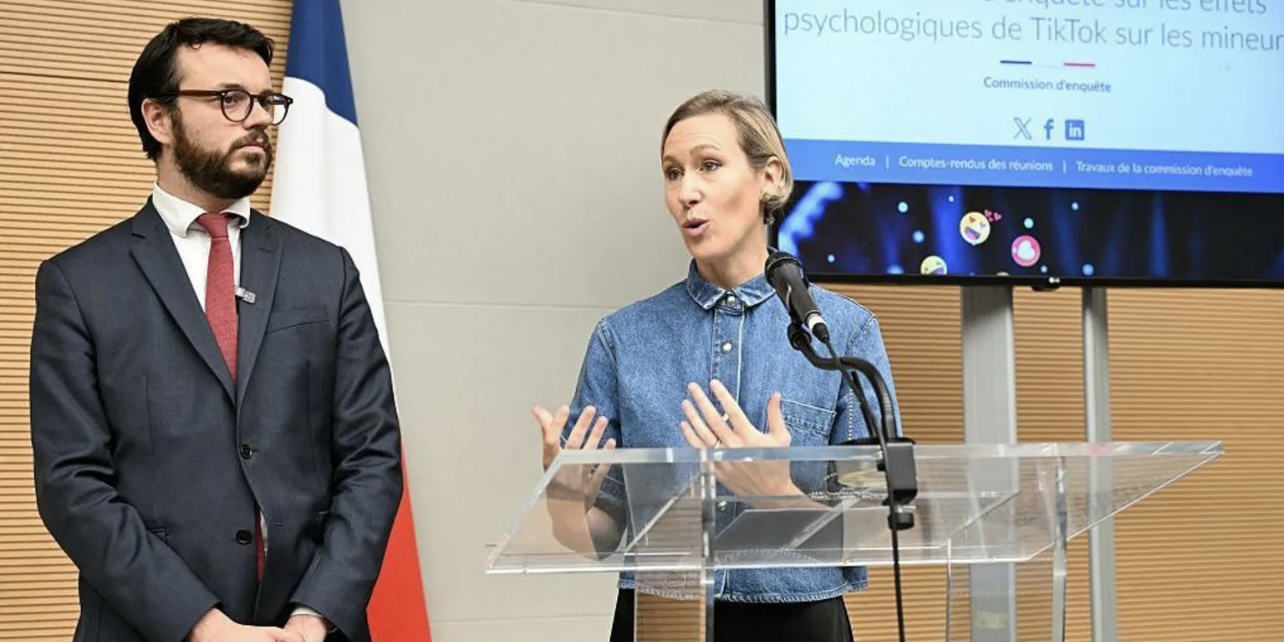
A French parliamentary commission has recommended that children under 15 be prohibited from using social media, while teenagers aged 15 to 18 should be subject to a nighttime “digital curfew.” The proposal follows a six-month investigation into TikTok’s psychological impact on minors, which concluded that the platform deliberately exposes young people to harmful, addictive, and unsafe content. The commission, which gathered testimony from teenagers and families affected, stressed the need to compel TikTok to revise its operating model. In response, TikTok firmly denied the findings, dismissing them as a “misleading characterization” and claiming the commission unfairly targeted the platform for broader industry and societal problems.
TikTok has stated that it runs a strong trust and safety program, offering more than 70 features and settings aimed at protecting teenagers and families on its platform. However, a French cross-party commission was not convinced. After months of investigation, the commission described TikTok as one of the most harmful social media platforms for young people, calling it “a production line of distress.” They argued that the company has not done enough to limit young users’ exposure to harmful and addictive content.
These recommendations follow a recent move in Australia, where children under 16 will be banned from social media starting December 10. Platforms such as Facebook, Instagram, Snapchat, and YouTube could face heavy fines if they fail to take reasonable measures to block under-16s from creating accounts.
The French inquiry was triggered by families who accused TikTok of exposing their children to dangerous content linked to self-harm and suicide. Testimonies from parents highlighted heartbreaking stories, including one mother who said her daughter consumed videos promoting suicide as a form of freedom before taking her own life in 2021. Another mother, Martine, shared how her 14-year-old daughter, Lilou, was overwhelmed with content about depression and death, with no encouraging or hopeful messages.
In response to these findings, the inquiry team issued 43 recommendations to help protect children, including:
- Banning social media for children under 15.
- Imposing a “digital curfew” between 10 p.m. and 8 a.m. to stop late-night scrolling.
- Prohibiting mobile phones in schools.
- Introducing a future law on “digital negligence,” holding parents accountable if they fail to protect their children online.
The lead author of the report, Laure Miller, explained that this potential new offense would simply extend existing child protection laws. She emphasized the responsibility of parents, noting that if a young child spends seven hours a day on TikTok, it raises serious questions about their safety and well-being.
France is not alone in its efforts to restrict children’s access to social media. Other European Union countries are also taking steps: Denmark is weighing a ban for those under 15, while Spain has drafted legislation requiring parental consent for users under 16. At the European level, Commission President Ursula von der Leyen has expressed interest in Australia’s new child social media law and announced that a panel of experts will deliver recommendations by the end of 2025 on how Europe should respond.
In reaction to the French inquiry’s findings, TikTok highlighted its existing measures, including a 60-minute daily screen-time limit for users under 18 and reminders encouraging under-16s to log off after 10 p.m. However, inquiry chairman Arthur Delaporte said he had referred allegations that TikTok intentionally put users’ lives at risk to the Paris public prosecutor, who will decide whether further legal action is necessary.
Delaporte has also been asked to investigate the recent case of French influencer Jean Pormanove, whose death was streamed live on the platform Kick. Meanwhile, France’s National Assembly is exploring broader regulation of the digital sector, particularly around how online content is funded and monetized.



 English