
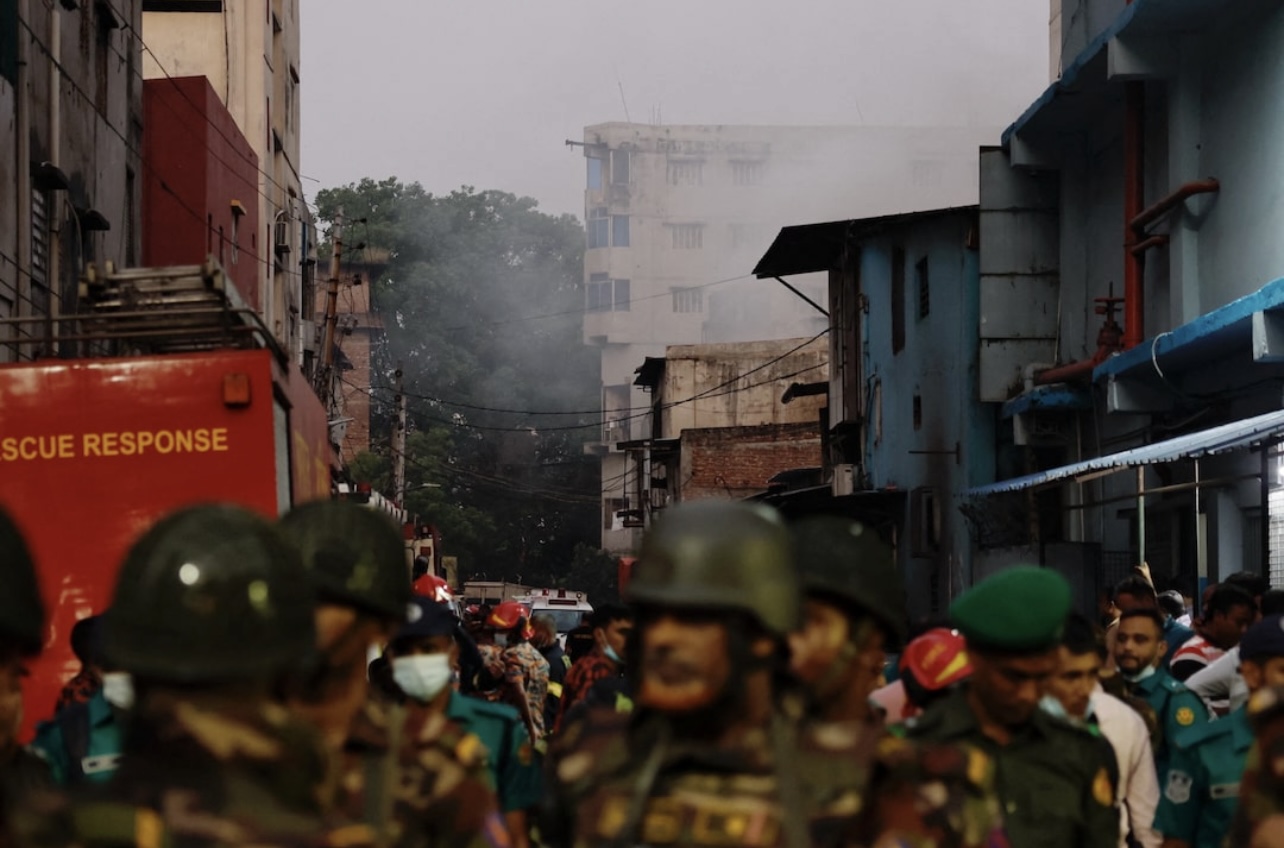
A fire that ripped through a garment factory and an adjacent chemical warehouse in the Mirpur area of Dhaka on Tuesday has killed at least 16 people and injured several others, officials said. Rescue teams recovered multiple bodies from the building and warned the death toll could rise as searches continued.
Firefighters said the blaze started on the third floor of the multi-storey factory and then spread to the neighbouring chemical storage, where plastics and bleaching agents were reported to have been kept. The conflagration sent thick smoke and potentially toxic fumes through the complex, complicating rescue and firefighting efforts.
Authorities and fire officials investigating the scene said many of the victims appear to have died from inhaling toxic gas rather than fatal burns. Investigators also reported that a grilled roof door had been kept locked, which impeded escape routes for workers. Officials said neither the garment unit nor the chemical warehouse had an approved fire-safety plan.
Local and national emergency services — including the fire service, police and paramilitary units — were deployed to bring the fire under control; parts of the warehouse reportedly continued to smoulder after the factory blaze had been extinguished. Relatives gathered near the scene looking for missing workers, some clutching photographs of loved ones as authorities worked to identify the dead.
The interim government expressed sorrow and called for a thorough probe into the cause of the blaze and the safety compliance of the buildings. Police and army personnel said they were trying to locate the owners of the factory and the adjoining warehouse as part of the inquiry. Local news outlets reported that the warehouse may have been operating without the required licence.
Bangladesh’s garment sector — the country’s largest export industry and a major employer of roughly four million people — has a long history of deadly industrial accidents that have prompted reforms and international scrutiny since disasters such as the 2012 Tazreen fire and the 2013 Rana Plaza collapse. Rights groups and labour advocates have in the past urged stricter enforcement of building and fire safety rules, particularly in smaller or informal production units and storage sites.
What investigators are expected to look at
Whether toxic chemicals stored in the warehouse were appropriately licensed and stored.
Building access and escape routes (including the reported locked roof door) and why emergency exits were not usable.
Electrical wiring, ignition source, and whether safety inspections or clearances were in place.
The story is developing; authorities have said the toll may change as recovery and identification efforts continue. I based this report on on-the-ground reporting and statements from Reuters, the Associated Press and other local and international outlets.


 English