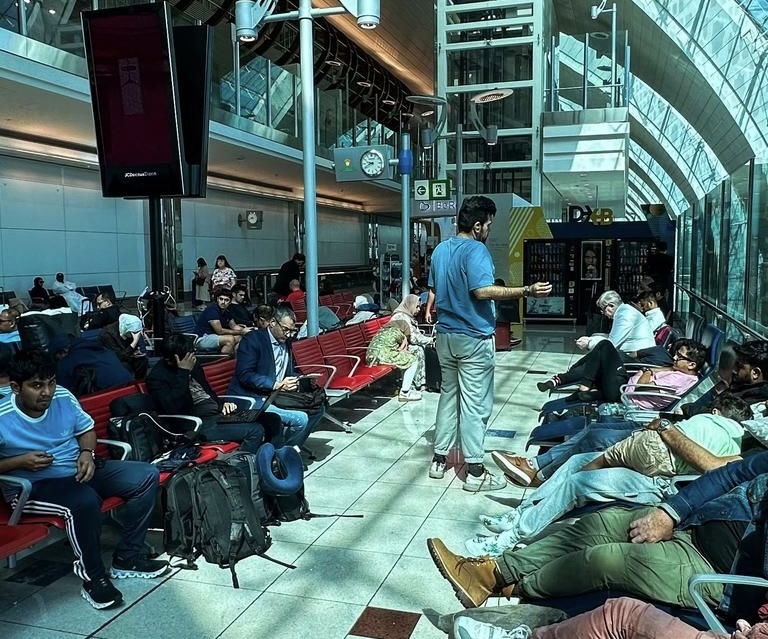
Flights across the Middle East have been cancelled, delayed and diverted following Iranian military strikes that triggered widespread airspace closures across the region. The escalation has disrupted international travel on a massive scale, stranding hundreds of thousands of passengers and forcing airlines to suspend or reroute services linking Europe, Asia and Africa.
Major aviation hubs including Dubai International Airport, Zayed International Airport and Hamad International Airport were among those significantly affected after Gulf states temporarily closed or restricted their airspace in response to security concerns. Flight tracking data showed large sections of normally busy skies over Iran, Iraq and neighbouring countries nearly empty as aircraft were rerouted to avoid potential danger zones.
Airlines across the globe suspended operations to key destinations including Dubai, Doha, Tel Aviv and Abu Dhabi as the crisis unfolded. Carriers such as Emirates, Etihad Airways, Qatar Airways, British Airways and Lufthansa either cancelled flights outright or diverted aircraft already in the air. Some long-haul services between Europe and Asia were forced to take extended routes, adding hours to journey times and increasing operational costs.
Passengers reported chaotic scenes at several airports, with departure boards filled with cancellations and travellers scrambling to secure alternative bookings. Many airlines said they were offering refunds or rebooking options, though the scale of disruption meant significant delays in processing changes. Aviation authorities warned that the situation remains fluid and that further schedule changes are possible depending on how regional tensions develop.
Experts say the Middle East serves as one of the world’s most critical aviation corridors, connecting continents through major transit hubs. When conflict disrupts this airspace, the ripple effects are felt globally. Until military tensions ease and aviation safety authorities declare the airspace secure, airlines are expected to maintain cautious routing policies, meaning disruptions could continue in the coming days.
Travellers with upcoming journeys to or through the Middle East are being advised to check directly with their airlines for the latest updates and to prepare for possible delays or last-minute changes as the situation evolves.

 English