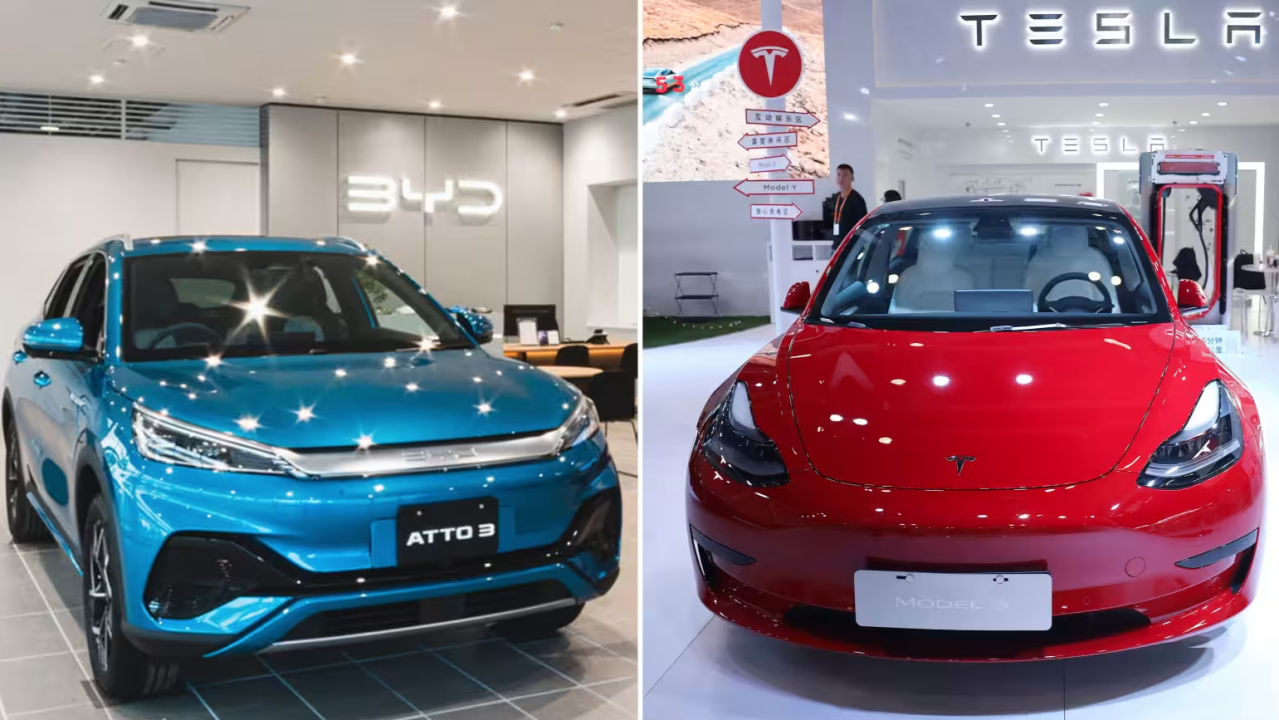
China’s electric vehicle giant BYD is on track to overtake Tesla as the world’s largest seller of electric vehicles, signalling a major shift in the global automotive industry. Recent sales figures and analyst forecasts indicate that BYD’s rapid growth, driven by strong demand in China and expanding international markets, has pushed it ahead of its US rival in total annual EV sales.
BYD, which is backed by long-time investor Warren Buffett, has benefited from China’s position as the world’s biggest EV market. Domestic consumers have increasingly favoured locally produced electric cars, helped by competitive pricing, a wide range of models and government support for clean energy transportation. The company’s vertically integrated business model, which includes in-house battery production, has enabled it to keep costs down and scale up production more efficiently than many competitors.
In contrast, Tesla has faced slowing demand in some of its key markets, including the United States and parts of Europe. The company has also been affected by intensifying competition, price cuts that have squeezed profit margins and the gradual reduction of EV subsidies in several countries. While Tesla remains a global leader in EV technology and brand recognition, its vehicle deliveries have shown signs of stagnation compared with BYD’s accelerating sales.
BYD’s expansion beyond China has further strengthened its position. The company has been increasing its presence in Europe, Southeast Asia, Latin America and the Middle East, positioning itself as a global player rather than a purely domestic champion. Its growing overseas footprint has helped offset slower growth in more mature EV markets and has boosted its overall sales volumes.
Industry analysts say BYD’s rise reflects broader changes in the global EV sector, with Chinese manufacturers becoming increasingly dominant due to their cost advantages, manufacturing scale and rapid innovation. The shift also highlights how competition in the EV market is intensifying as consumers are offered more choices across different price ranges.
Despite losing its top spot in sales, Tesla continues to invest heavily in future technologies such as autonomous driving, artificial intelligence and next-generation vehicle platforms, which could shape the next phase of competition in the EV industry. However, BYD’s emergence as the world’s leading EV seller marks a significant milestone, underscoring China’s growing influence in the global transition to electric mobility.



 English