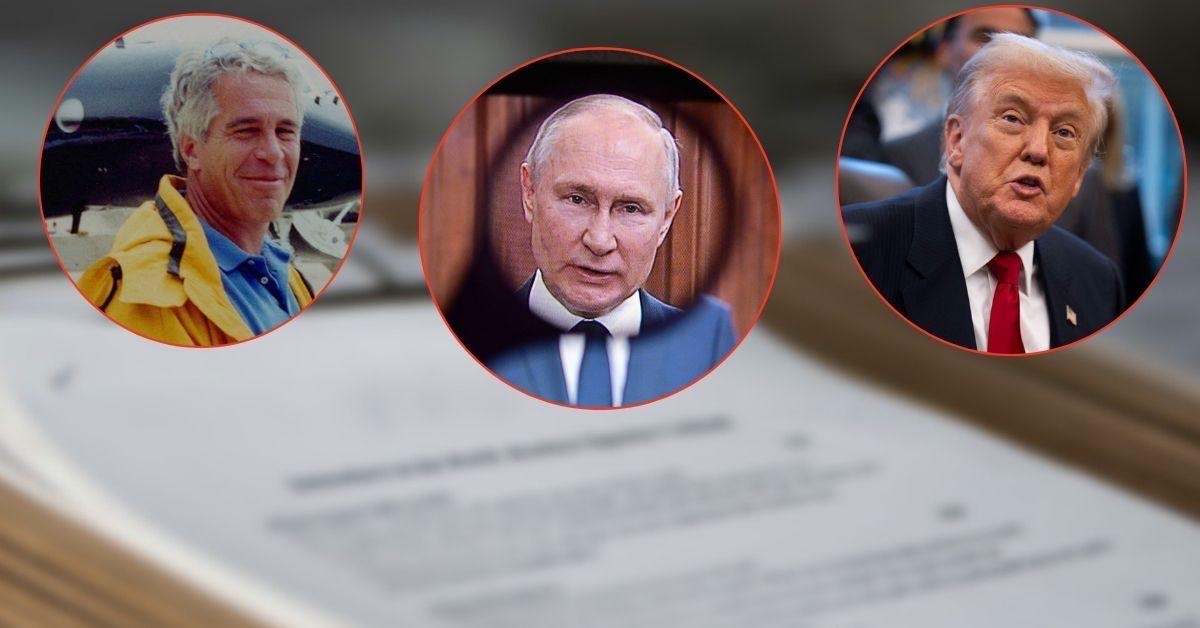
Newly released court documents have revealed that the late financier Jeffrey Epstein made repeated efforts to build relationships with Russian officials, including attempts to gain access to President Vladimir Putin, according to several international media reports. The documents, made public as part of ongoing disclosures connected to Epstein’s criminal cases, include emails and correspondence showing that Epstein sought to use political, business and academic intermediaries to establish ties with senior figures in Moscow. While there is no evidence that Epstein ever met Putin or that the Russian president responded to his outreach, the records suggest that Epstein was actively trying to position himself as a valuable contact for Russian officials during the mid-to-late 2010s.
In the documents, Epstein is shown communicating with well-connected individuals in Europe and the United States, encouraging them to pass messages to Russian leadership or arrange introductions. In one email, Epstein suggested that Russian Foreign Minister Sergey Lavrov should meet with him, implying that he could offer insights or assistance. Other correspondence indicates that Epstein maintained friendships with Russian economic officials and attended or planned to attend high-profile forums in Russia, including major international business conferences.
The files also highlight Epstein’s relationship with Sergey Belyakov, a former Russian government official with a background linked to Russia’s security services, whom Epstein described as a close friend. Their exchanges suggest coordination around travel, meetings and personal matters, further underlining Epstein’s interest in cultivating influence within Russian political and economic circles. Analysts reviewing the documents say this behavior fits a broader pattern of Epstein attempting to associate himself with powerful global figures despite his prior conviction for sex crimes in the United States.
References to Russia and Putin appear frequently throughout the document release, although experts caution that many mentions relate to media articles, forwarded news reports or speculative discussions rather than confirmed personal contact. The Kremlin has firmly rejected any suggestion that Epstein had an official relationship with the Russian government or intelligence services, dismissing such claims as unfounded.
The revelations add another layer to the complex international web surrounding Epstein, who died in a New York jail cell in 2019 while awaiting trial on federal sex trafficking charges. Investigators and journalists continue to examine how Epstein was able to move among influential political, financial and academic circles across multiple countries, raising renewed questions about oversight, accountability and the extent of his global connections.



 English