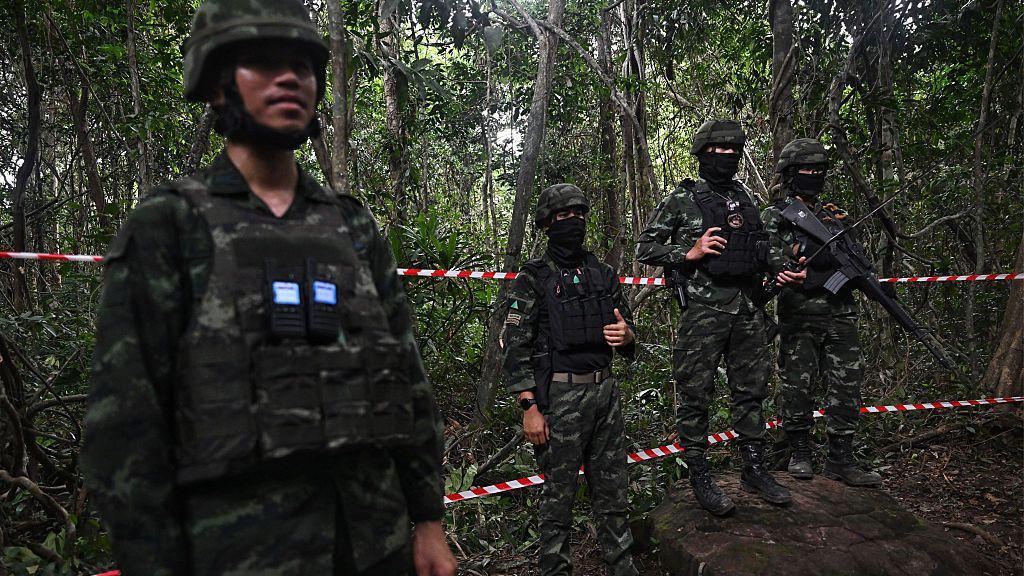
Renewed fighting between Thailand and Cambodia has intensified along multiple points of their disputed border, raising concerns about a widening conflict and a growing humanitarian crisis. Clashes resumed on Sunday night and escalated through Monday and Tuesday, involving artillery, drones, and airstrikes. Both sides accuse each other of breaking a fragile ceasefire that had been brokered in October.
According to Cambodian authorities, at least seven civilians have been killed so far. On the Thai side, three soldiers have reportedly died in the recent clashes, with dozens more wounded on both sides. The violence has triggered a mass exodus, with over 140,000 civilians believed to have fled their homes in border provinces, seeking refuge from artillery and aerial strikes. Local authorities on both sides are struggling to provide adequate shelter, food, and medical care for the displaced population.
The Thai military has launched air and ground strikes against alleged Cambodian military positions, stating that the actions are intended to defend Thai territory and respond to provocations. Phnom Penh denies initiating aggression, asserting that Thai shelling and airstrikes have killed civilians and damaged infrastructure. A senior adviser to the Cambodian prime minister has called for immediate bilateral talks to end the conflict, while Thailand insists that negotiations cannot proceed until Cambodia de-escalates and ceases military incursions.
The border dispute between the two nations dates back to colonial-era boundary demarcations, which left several areas, including border temples and rural territories, contested. A fragile ceasefire agreed upon in October temporarily eased tensions, but recent incidents — including alleged shelling, landmine explosions, and troop movements — appear to have reignited hostilities.
The human cost is already severe, with civilians bearing the brunt of the fighting. Thousands have been displaced, and humanitarian agencies warn that continued escalation could worsen the crisis. There is limited hope for immediate de-escalation, as both sides continue to blame the other for the collapse of the ceasefire. Regional and international actors, including humanitarian organisations, are urging both governments to enforce a ceasefire and protect civilians, but the situation remains highly volatile.

 English