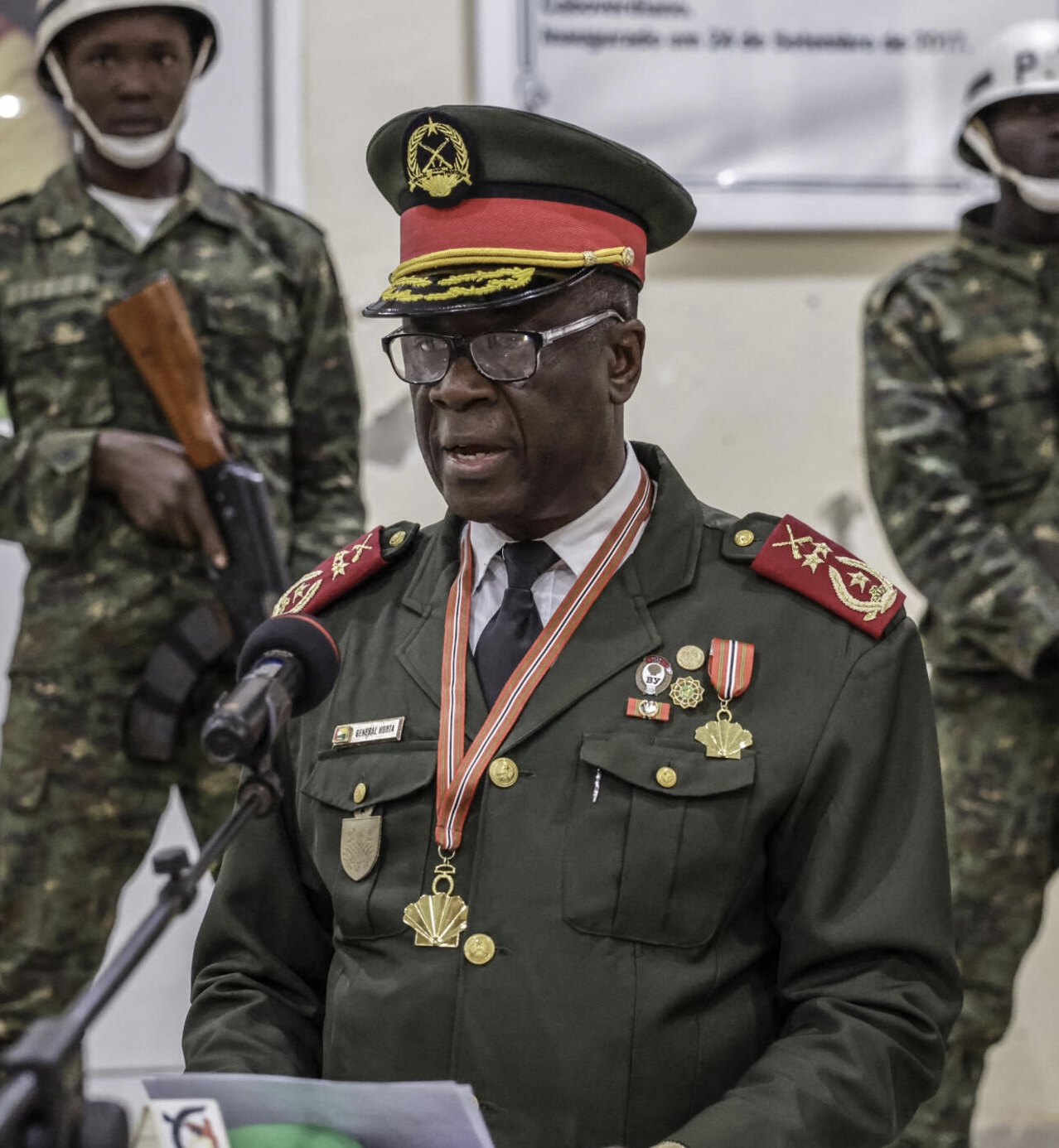
After a disputed presidential election, the military in Guinea-Bissau on Wednesday announced it had seized full control of the country, suspending the vote count and placing the incumbent president under arrest.
The following day the army installed Horta Inta-A Na Man — also known in media as Horta N’Tam — as transitional head of state, swearing him in at a ceremony held at the military headquarters in the capital, Bissau.
The military junta, calling itself the High Military Command for the Restoration of National Security and Public Order, declared a one-year transitional period under Horta’s leadership.
Officials said the takeover was necessary to halt what they described as a “plan” involving politicians and drug traffickers allegedly seeking to undermine the election’s legitimacy. Borders were closed, media broadcasts suspended, and an overnight curfew imposed as the junta claimed it aimed to restore public order.
International reaction was immediate and critical. Regional bodies including the Economic Community of West African States (ECOWAS) and the African Union (AU) condemned the coup and demanded the immediate release of detained officials and a swift return to constitutional governance.
Observers warned that the move deepens a longstanding cycle of political instability in Guinea-Bissau, a country which has endured multiple coups since independence and remains under pressure from chronic governance challenges, including drug-trafficking networks and weak institutions.


 English