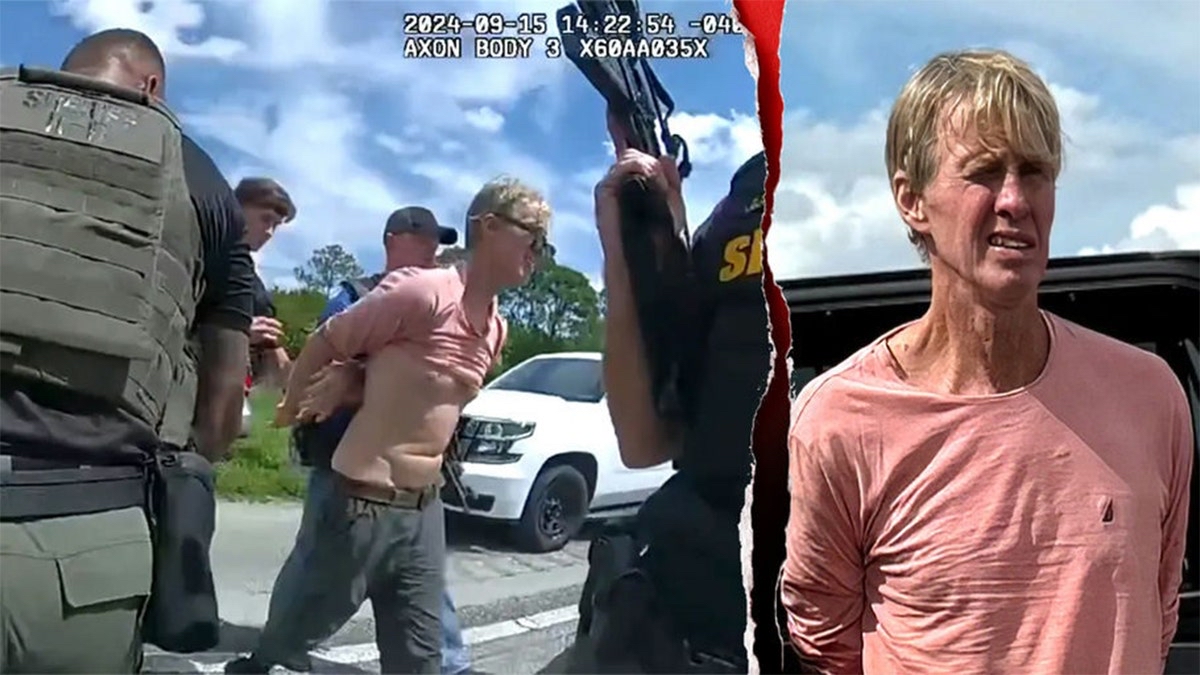
A Florida federal judge has sentenced Ryan Wesley Routh to life in prison for attempting to assassinate former U.S. President Donald J. Trump during the 2024 presidential campaign. Routh, 59, was convicted by a federal jury in September 2025 on five criminal counts, including attempted assassination of a major presidential candidate and several firearm-related charges after he was found lying in wait near Trump’s golf course in West Palm Beach, Florida.
The sentencing took place in Fort Pierce, Florida, where U.S. District Judge Aileen Cannon imposed the maximum federal penalty on February 4, 2026. Prosecutors had urged the judge to order Routh to spend the rest of his life behind bars, saying that he had spent weeks planning the attack, showed no remorse for his actions and posed ongoing danger due to the premeditated nature of the plot. Routh also received additional years on a separate gun charge.
The attempted assassination occurred on September 15, 2024, at Trump International Golf Club in West Palm Beach. Evidence presented at trial showed that Routh was armed with a rifle and positioned himself in shrubbery facing the golf course before Trump arrived. A U.S. Secret Service agent assigned to protect Trump spotted Routh and opened fire, prompting him to drop his weapon and flee the scene. Although Trump was never injured, prosecutors argued that Routh’s actions were clearly intended to kill the then-presidential candidate.
Routh’s conduct at trial drew attention for its unusual and chaotic nature. During the reading of the guilty verdict, Routh attempted to harm himself with a pen and was restrained by marshals. He initially represented himself during the trial and later sought legal counsel for the sentencing phase. His defense team had asked for a significantly reduced sentence, citing his age and other mitigating factors, but the court rejected the request in favor of life imprisonment as warranted by federal sentencing guidelines.
The case marked one of several high-profile politically motivated threats against senior political figures in the United States during the 2024 election cycle and underscored ongoing concerns about security for public officials and candidates.

 English