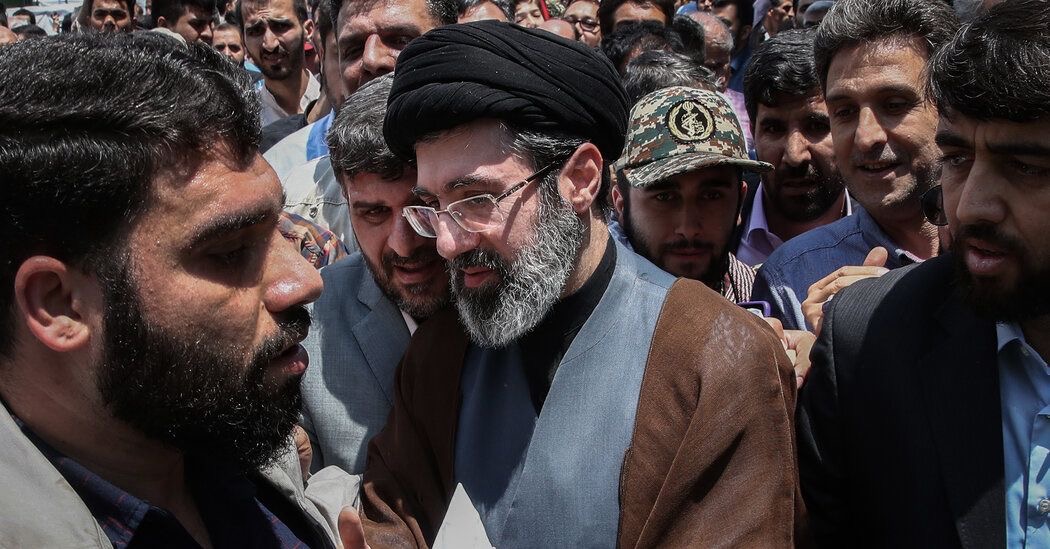
Mojtaba Khamenei, the son of longtime Iranian leader Ali Khamenei, has been chosen as the new Supreme Leader of Iran following the death of his father, according to multiple international news reports and Iranian state media. The decision was made by the Assembly of Experts, the clerical body responsible for selecting Iran’s highest authority, after several days of deliberations during a period of escalating conflict in the Middle East.
The appointment came shortly after Ali Khamenei, who had ruled Iran since 1989, was killed in late February 2026 during airstrikes linked to the widening regional war involving the United States and Israel. His death created a sudden leadership vacuum in the Islamic Republic and triggered the constitutional process to choose a successor. An interim leadership council briefly handled the duties of the position until the Assembly of Experts formally elected Mojtaba Khamenei on 8 March 2026.
Mojtaba Khamenei, a 56-year-old cleric who had long been influential behind the scenes of Iranian politics, was widely viewed as a possible successor due to his close ties with the powerful Islamic Revolutionary Guard Corps and his role in managing political and security affairs within his father’s office. Although he had not previously held a major public government position, analysts say he wielded significant influence in Iran’s political establishment for years.
His elevation marks a controversial moment in Iranian politics because it is the first time since the 1979 Islamic Revolution that the leadership has effectively passed from father to son, raising debate among observers about the possibility of a dynastic style of rule in the Islamic Republic. Supporters within Iran’s political and military institutions quickly pledged loyalty to the new leader, portraying the transition as necessary for national unity during a time of war and international pressure.
The announcement has drawn strong reactions internationally. Western leaders and analysts have warned that the change in leadership could intensify tensions in the region, especially as fighting between Iran, Israel and allied forces continues and global oil prices have surged amid fears of wider conflict.
Mojtaba Khamenei now becomes only the third Supreme Leader in the history of the Islamic Republic, following Ruhollah Khomeini, who led the 1979 revolution, and his father Ali Khamenei. As Supreme Leader, he holds the highest political and religious authority in Iran and serves as commander-in-chief of the country’s armed forces, placing him at the center of the nation’s political future during one of the most volatile periods in the region’s recent history.

 English