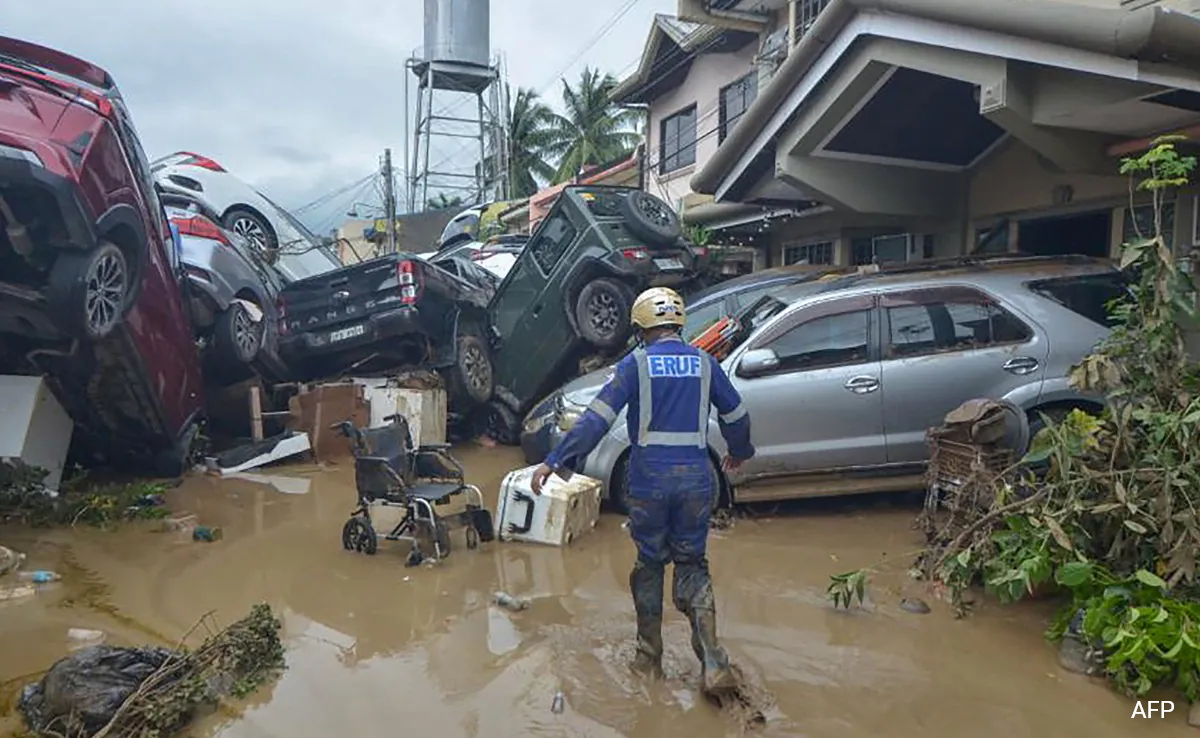
A powerful typhoon known locally as Tino slammed into the central Philippines, leaving a trail of destruction and claiming at least 85 lives, with many more still missing or unaccounted for as of early November 2025. The hardest-hit region was the province of Cebu, where severe flash floods turned streets into rivers, houses were submerged up to rooftops and entire communities found themselves trapped. Officials say a large portion of the fatalities occurred there, especially where flooding overtook homes and vehicles.
In one particularly tragic incident, a military helicopter belonging to the Philippine Air Force crashed during a relief mission in Agusan del Sur, killing six crew members. The crash happened amid the already-complex rescue operations.
Evacuations numbered in the hundreds of thousands. Over 300,000 people were moved out of harm’s way before or during the storm, as homes and infrastructure were battered. Authorities declared a state of calamity in Cebu to expedite emergency funds and relief operations after this typhoon struck a region still recovering from a major earthquake in September.
Meteorologists noted that though the winds of Kalmaegi weakened slightly as it crossed land, the real danger proved to be the flooding and landslides triggered by torrential rains. Rainfall in 24 hours in the Cebu City area reached 183 mm significantly above usual monthly averages — overwhelming drainage, rivers and flood-control systems.
The catastrophe highlights the vulnerability of disaster-prone nations like the Philippines, which face not only the regular assault of typhoons (on average around 20 per year), but also earthquakes, volcanic threats, and infrastructural fragility.
Relief efforts are underway, with first-responders working to reach isolated communities now cut off by debris and landslides. The ground challenge now includes clearing blocked roads, restoring power and communications, delivering food, water and shelter, and coordinating the missing-persons search. Some experts warn the full death toll and damage cost may rise as access improves and assessments are completed.



 English