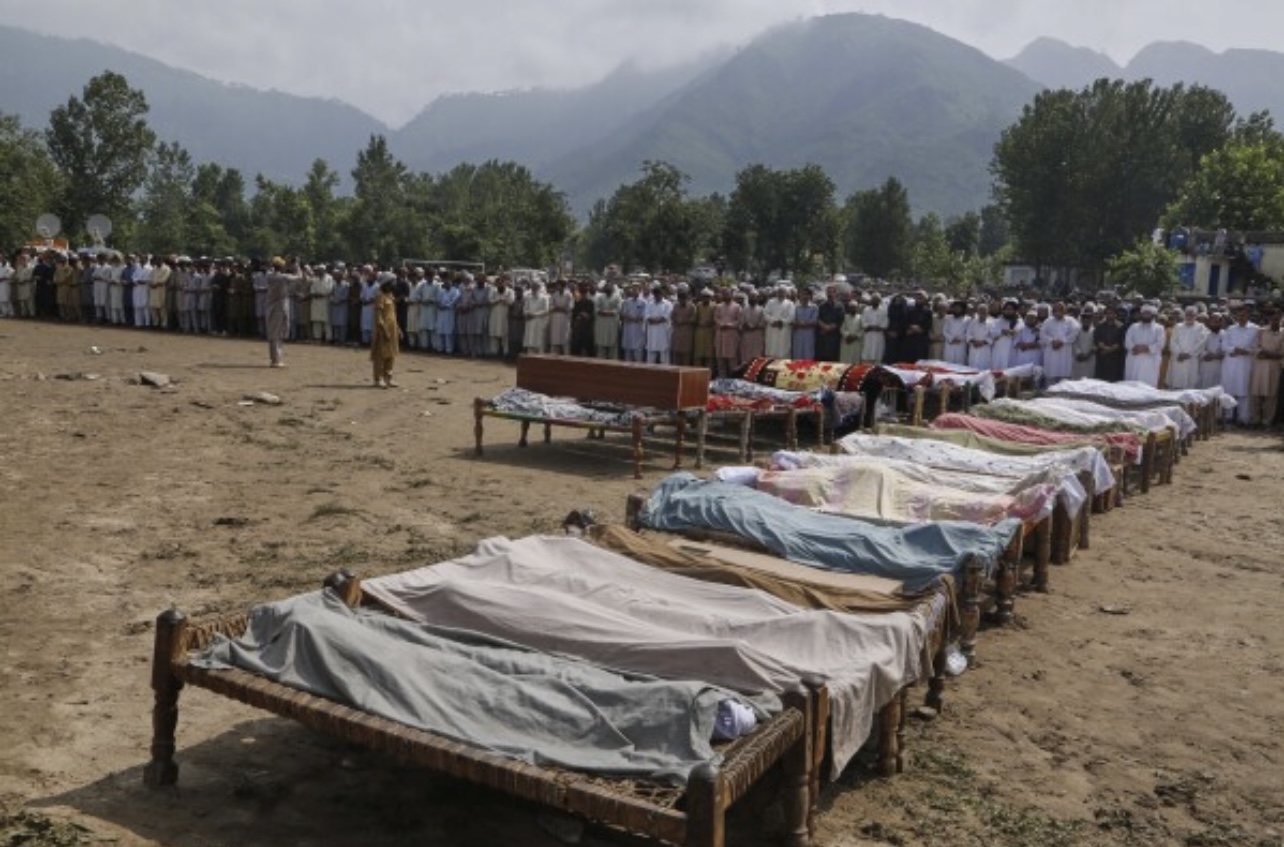
More than 90 people have been laid to rest in Pakistan’s north-western district of Buner after devastating floods swept through the region.
Funeral prayers were held across the district on Sunday, where grieving families and neighbours gathered to bury the victims. Officials say the death toll is likely to rise as rescue teams continue to search for people missing in remote areas.
Heavy monsoon rains triggered flash floods that destroyed homes, bridges and farmland, leaving thousands displaced. Many villages remain cut off after major roads were washed away, hampering relief efforts. Local authorities said emergency services, backed by the army, are working to deliver food, water and medical aid. Survivors have described spending hours trapped on rooftops or clinging to trees as the waters rose.
“This is one of the worst disasters Buner has faced in years,” said Deputy Commissioner Buner, adding that temporary shelters had been set up for those who lost their homes.
Aid agencies have warned of the risk of waterborne diseases spreading in crowded camps where clean drinking water is scarce.
Pakistan has seen increasingly severe monsoon floods in recent years, which experts link to climate change and poor infrastructure in vulnerable mountain regions.
Floods in Pakistan
•Pakistan is one of the countries most vulnerable to climate change, with intense monsoon rains often causing flash floods.
•In 2022, catastrophic flooding left more than 1,700 people dead and displaced millions nationwide.
•Mountain districts like Buner are particularly at risk due to steep terrain, deforestation and fragile infrastructure.
•Experts warn that without stronger flood defences and early warning systems, such disasters are likely to become more frequent.



 English