
Hundreds of cyclists some fully nude, others in costumes or partial dress rode through Portland on Sunday in an impromptu protest aimed at the Trump administration’s recent moves to deploy federal forces and National Guard troops to the city. Organizers and participants said the ride, in the spirit of Portland’s long-running World Naked Bike Ride tradition, was intended as a peaceful, satirical rebuke of federal intervention and a demonstration of body-positive, nonviolent dissent.
The event, held Oct. 12–13, drew demonstrators past federal buildings and immigration enforcement sites, with participants chanting and waving signs while remaining largely peaceful. Organizers described the ride as an emergency action called to counter what they say are alarmist portrayals of Portland used to justify a wider federal response. Police urged riders to stay on sidewalks to avoid arrests, and city officials reiterated that public nudity as political protest is protected under Oregon law so long as participants avoid lewd conduct.
Longstanding local tradition and legal context shaped the demonstration. Portland has hosted World Naked Bike Ride events for years as a hybrid protest and celebration — typically aimed at cyclist safety, oil dependence and body-positivity and the ride’s organizers maintain that nudity used in these political contexts enjoys constitutional protection in Oregon, while also warning participants against lewd behavior that could prompt enforcement.
The protest took place against a backdrop of heightened national attention and political friction. In recent weeks, the White House’s rhetoric about unrest in some U.S. cities and federal plans to deploy troops spurred local backlash; Portlanders have used humor and theatrical tactics from inflatable animal costumes to satirical songs to counter what activists call an exaggerated depiction of the city’s problems. A federal judge has at times intervened in deployment plans, underscoring the legal and political dispute over the federal role in local demonstrations.
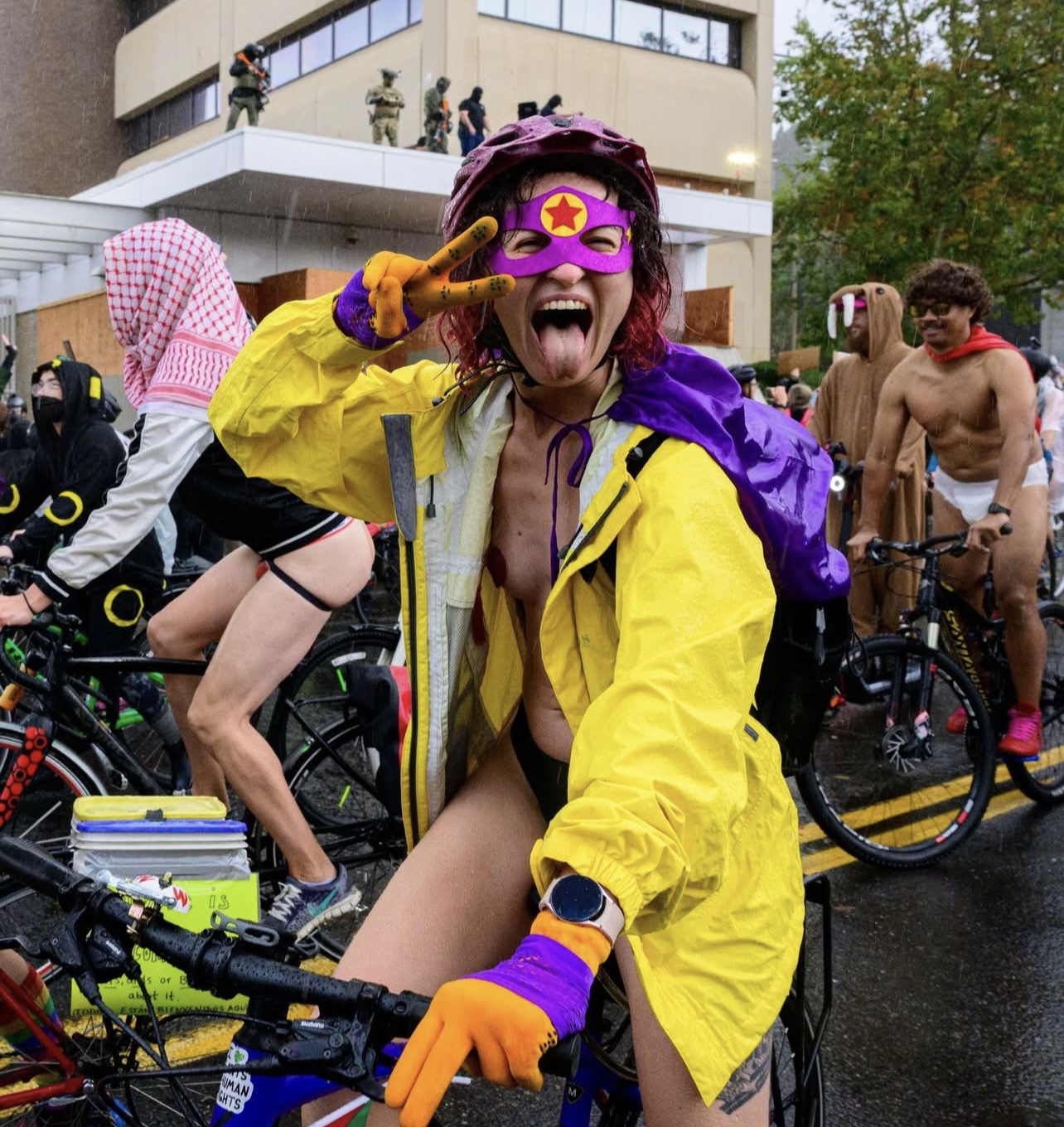
Reaction in Portland was mixed. Supporters said the naked ride embodied the city’s tradition of irreverent, nonviolent protest and served as a direct, public statement against militarized responses. Critics — including some conservative commentators and online influencers framed the demonstrations as evidence of lawlessness, a narrative that has helped fuel the federal government’s interest in sending forces to high-profile protest sites. Media outlets captured both the playful and the confrontational dimensions of the day.
City officials and police emphasized that while the ride was permitted as a political demonstration, public safety remained a priority. Organizers likewise urged mutual respect and nonviolence, and many participants stressed the symbolic nature of the action: a visibly Portland form of protest meant to highlight local values, creativity, dissent and a preference for protest through joy rather than escalation.
Authorities monitored the route and made a small number of arrests when riders allegedly violated traffic or public conduct rules, but there were no widespread violent clashes reported as of Monday morning. Coverage and commentary about the ride continue to reflect the broader debate over federal intervention in local protests.


 English