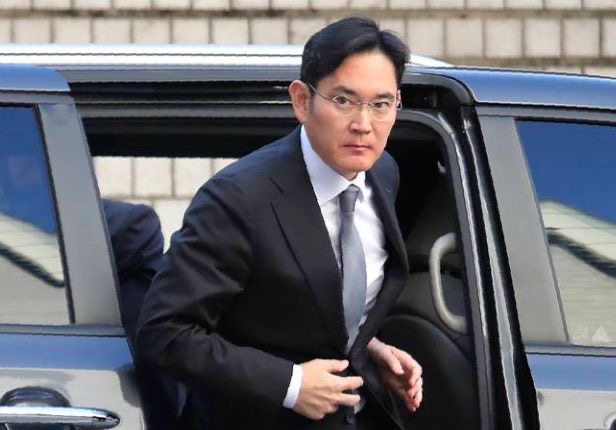
South Korea’s top court has cleared Samsung CEO Lee Jae-yong of fraud charges, capping a years-long legal struggle over his role in a 2015 merger. Lee, the grandson of Samsung’s founder and the company’s de facto leader since 2014, was accused of using stock and accounting fraud to take control of the business. The Supreme Court in Seoul maintained a not guilty ruling after Lee was acquitted of all counts in two previous trials. The case brought considerable attention to the IT behemoth, as the country deals with corporate corruption scandals involving its powerful family-run companies known as chaebols.
Today, the Supreme Court has clearly established through its final verdict that the merger of Samsung C&T and the accounting treatment of Samsung Biologics were legal,” Samsung’s lawyers stated on Thursday. “We sincerely thank the court for its wise judgement following a thorough five-year trial process.” Prosecutors charged Lee and his advisors with inflating the value of his pharmaceutical company, Samsung Biologics, through fraudulent accounting. They said that the increased value enabled him to purchase a larger part of a major Samsung subsidiary in a 2015 merger deal, ensuring his succession.
Prosecutors also claimed that the merger was intended to transfer ownership of the company from Lee’s father, Lee Kun-hee. His father, who had his own legal issues, suffered a heart attack in 2014 and died in 2020. The younger Lee was originally detained in 2017 for paying former President Park Geun-hye’s advisor in order to smooth his succession at Samsung. Throughout his legal troubles, he had two separate jail sentences reduced, one due to a special presidential pardon while on parole from prison. At the time, the government stated that the CEO of the country’s largest corporation was required to oversee South Korea’s economic recovery in the aftermath of the Covid-19 outbreak.
In 2024, a district judge absolved Lee of all charges related to the $8 billion (£5.97 billion) merger of two of its businesses. Lee was cleared again when prosecutors appealed the case to the High Court. Legal battles over the last decade have exacerbated Samsung’s problems as it grappled with rising competition. Samsung Electronics, which has large operations in cellphones and computer chips, has experienced diminishing revenues in recent years. Last year, during a trial, Lee admitted that Samsung has significant hurdles. “The reality facing [Samsung] is harder than ever, but I will overcome and take a step forward,” he told reporters. Tariffs imposed by US President Donald Trump present another possible barrier for Samsung, which exports a huge variety of items to the United States.
The court’s verdict was well received by the country’s business community. The Federation of Korean Industries said in a statement that the ruling will enable for quick decisions at the top of Samsung, assisting the economy in navigating trade tensions with the US.



 English