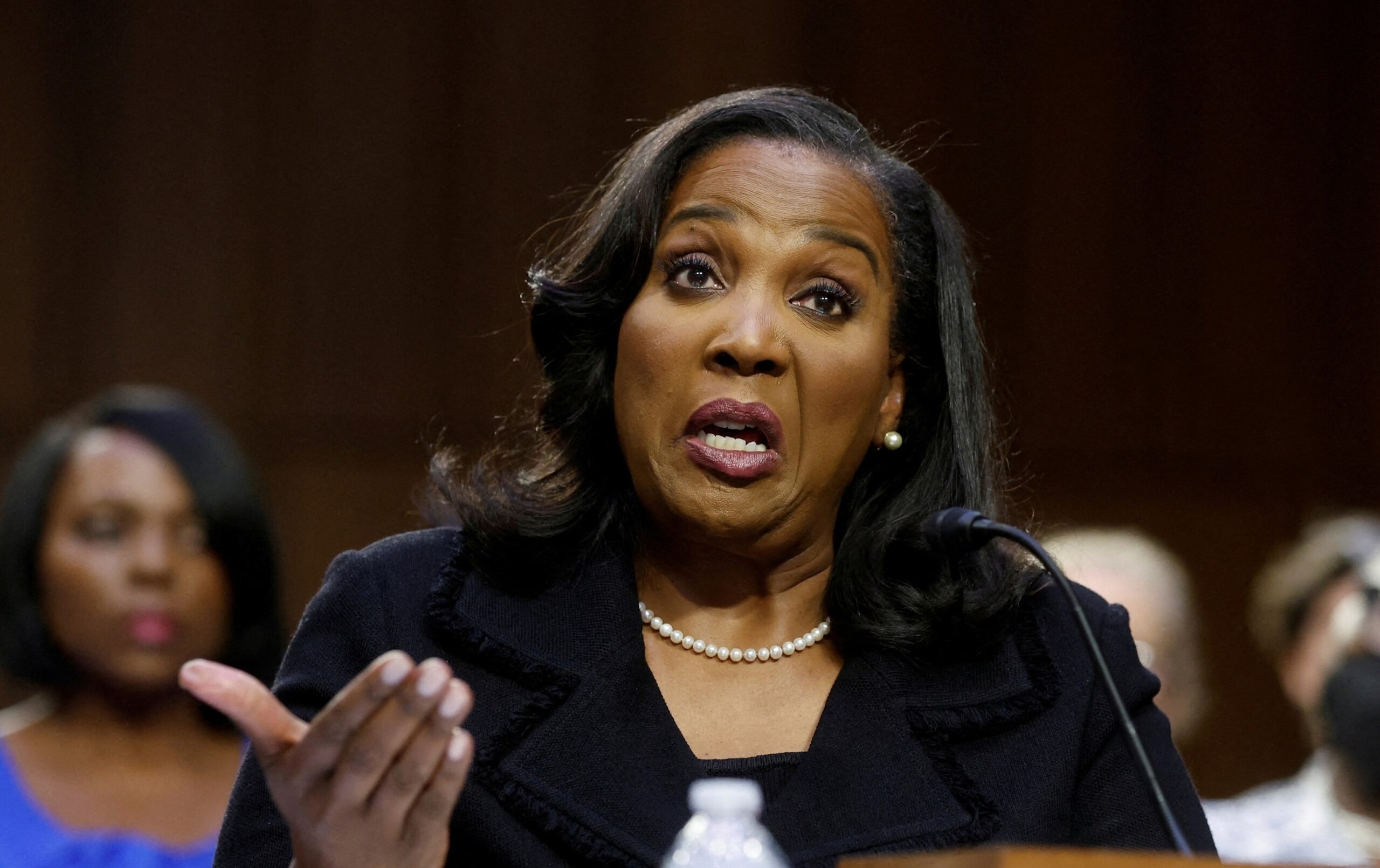
The U.S. Supreme Court heard arguments this week in a high-profile constitutional case over former President Donald Trump’s unprecedented effort to remove Federal Reserve Governor Lisa Cook. The case raises significant questions about the limits of presidential power and the independence of the central bank. Cook, appointed in 2022 as the first Black woman to serve on the Fed’s Board of Governors, is fighting to remain in her post after Trump sought to remove her in 2025, citing allegations of improper mortgage applications — claims she denies and which have not led to any criminal charges.
During Wednesday’s oral arguments, justices from across the ideological spectrum expressed skepticism about the administration’s broad interpretation of presidential firing power. Chief Justice John Roberts and other members questioned whether the alleged mortgage issues were serious enough to justify removal and noted that Cook was not given adequate notice or an opportunity to respond to the allegations. Justice Brett Kavanaugh warned that allowing the president unfettered authority to dismiss a Fed governor could undermine institutional safeguards and set a dangerous precedent. Several justices pressed the government’s solicitor general on why a formal hearing or meaningful process was not provided before the attempted removal. Observers noted that the court’s tone appeared cold toward the administration’s arguments, suggesting wariness about overruling long-standing legal protections for independent government officials.
The Trump administration contends that the president has broad constitutional authority to remove executive officers “for cause,” arguing that Cook’s alleged conduct satisfies that standard. Government lawyers also claimed that blocking her removal while the case is litigated could harm public confidence in the Federal Reserve. Critics, including Cook’s legal team, argued that Trump’s effort is politically motivated and that statutory “for cause” limits exist to prevent executive overreach. They warned that allowing removal under questionable allegations could threaten central bank independence and unsettle markets.
Legal scholars and market participants are closely monitoring the case, noting that a ruling in favor of broad presidential removal power could have far-reaching implications for economic policy and financial markets. No immediate decision from the Supreme Court is expected, with rulings on high-profile constitutional cases typically issued before the end of the court’s term in June 2026. In the meantime, Lisa Cook remains on the Fed board as the legal proceedings continue.

 English