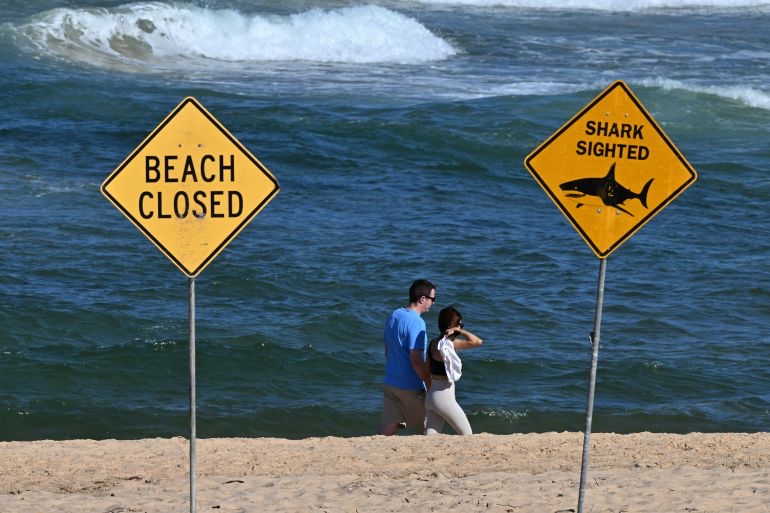
A surfer has been injured in the fourth shark attack to hit the Australian state of New South Wales in roughly 48 hours, in a series of incidents that has alarmed authorities and prompted widespread beach closures along the east-coast shoreline. The latest attack occurred on Tuesday morning near Point Plomer on the NSW Mid North Coast, where a 39-year-old man was bitten by a shark while surfing. Officials say the shark bit through his surfboard and grazed his body, leaving him with minor cuts and grazes before he was taken to Kempsey District Hospital and later discharged.
The cluster of attacks began over the weekend, a rare concentration of shark activity that has left two people critically injured. On Sunday a 12-year-old boy was seriously bitten in the Sydney Harbour area, sustaining severe leg injuries, and on Monday a 27-year-old man was badly injured in a separate attack at Manly Beach, with both victims requiring urgent medical care. Between these incidents, an 11-year-old boy had a narrow escape when a shark bit his surfboard at Dee Why Beach but he sustained no serious injuries.
In response to the string of attacks, beaches along much of the NSW coast have been closed and authorities have issued urgent warnings for swimmers, surfers and other beachgoers to stay out of the water until conditions improve. Surf Life Saving New South Wales, the main coastal safety organisation, has urged people to “just go to a local pool” instead of entering the ocean, describing current water conditions as unsafe due to poor visibility and heightened shark activity.
Marine experts and officials have suggested that recent heavy rainfall and resulting murky, brackish water conditions may be contributing to increased shark presence closer to shore. Rainwater runoff into rivers and coastal waters can attract fish and other prey, which in turn can draw predatory species such as bull sharks into areas where people swim and surf. Bull sharks, known for their comfort in both salt and brackish waters, are suspected to be behind several of the recent encounters, though definitive species identification has not been confirmed in all cases.
Police and marine authorities are continuing to monitor the situation and have stepped up surveillance efforts, including drone patrols and lifeguard jet skis, as part of efforts to keep the public informed and safe while assessing ongoing risks along affected stretches of coastline.



 English