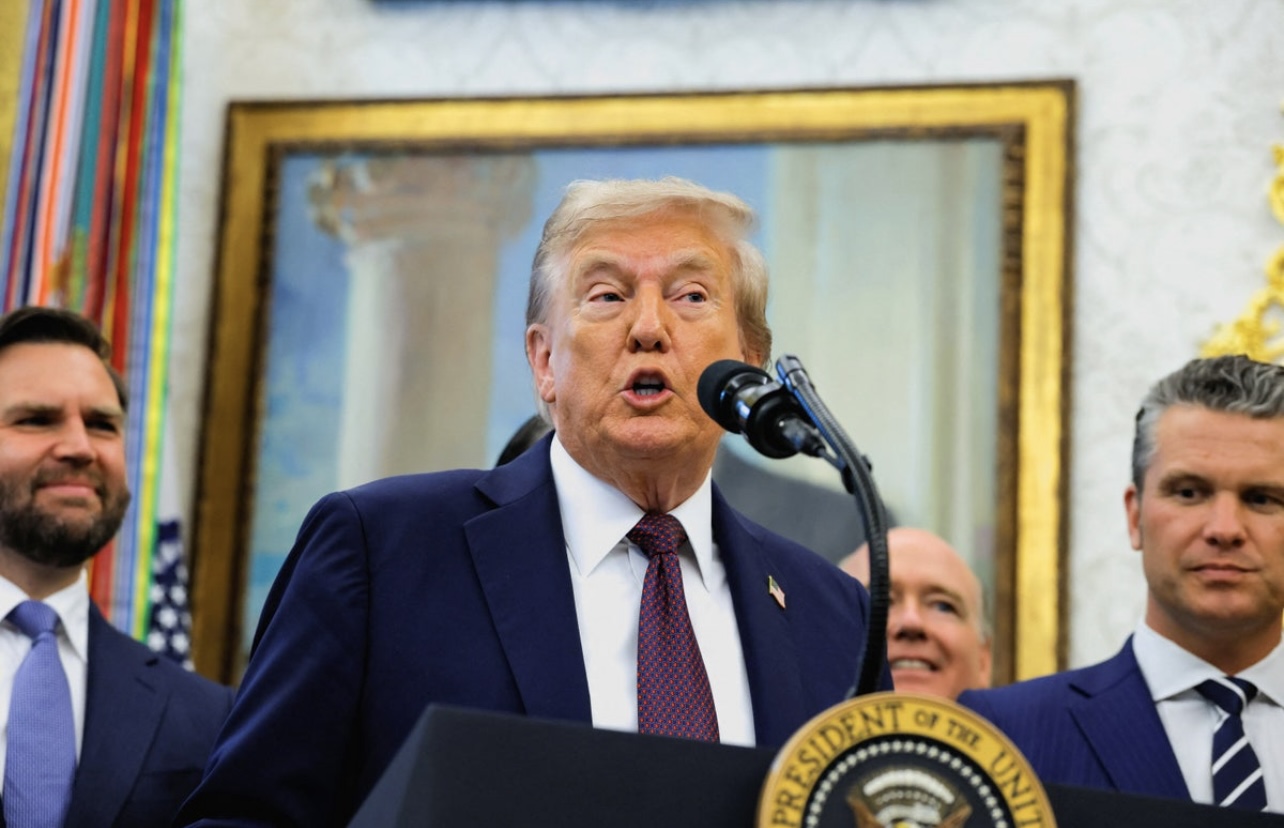
President Donald Trump stepped into the Oval Office on Tuesday to confront a wave of online speculation about his health, directly addressing unfounded rumors including those suggesting he had died calling them “fake news” and insisting he had been “very active” over the holiday weekend.
The president’s return to public view came after a conspicuous absence during Labor Day weekend. Paparazzi and social media’s attention intensified amid trending searches like “Trump Is Dead” and queries about his whereabouts, fueled by a blank presidential schedule and visible bruising on his hand. In response, Trump took to his Truth Social platform Sunday to quip “NEVER FELT BETTER IN MY LIFE.”
During the Oval Office briefing, Trump reacted with a mix of surprise and levity. When asked about the rumor that he had died, he described it as “pretty serious stuff” and dismissed it as media sensationalism. He countered critics by emphasizing his weekend had been anything but idle: “I’ve been very active, actually,” he told reporters.
But speculation wasn’t limited to social chatter. Observers noted Trump’s bruised hand—frequently concealed with makeup—reappeared, prompting questions about his well-being. The White House clarified the marks were due to extensive handshaking and aspirin use, and affirmed his condition of chronic venous insufficiency was mild and “common among individuals older than age 70.”
Setting a deliberate tone of defiance, Trump used the moment to criticize the credibility of the media, reinforcing his long-standing narrative about “fake news.”
The Oval Office announcement also served a strategic policy purpose: Trump revealed plans to move the U.S. Space Command headquarters from Colorado to Alabama an initiative aligned with his administration’s broader defense strategy.
In brief, President Trump’s Oval Office appearance aimed to quash a swirl of viral rumors with a blend of defiance, humor, and swift political messaging. His remarks underscore both the persistent media spotlight on his health and his determination to control the narrative.

 English