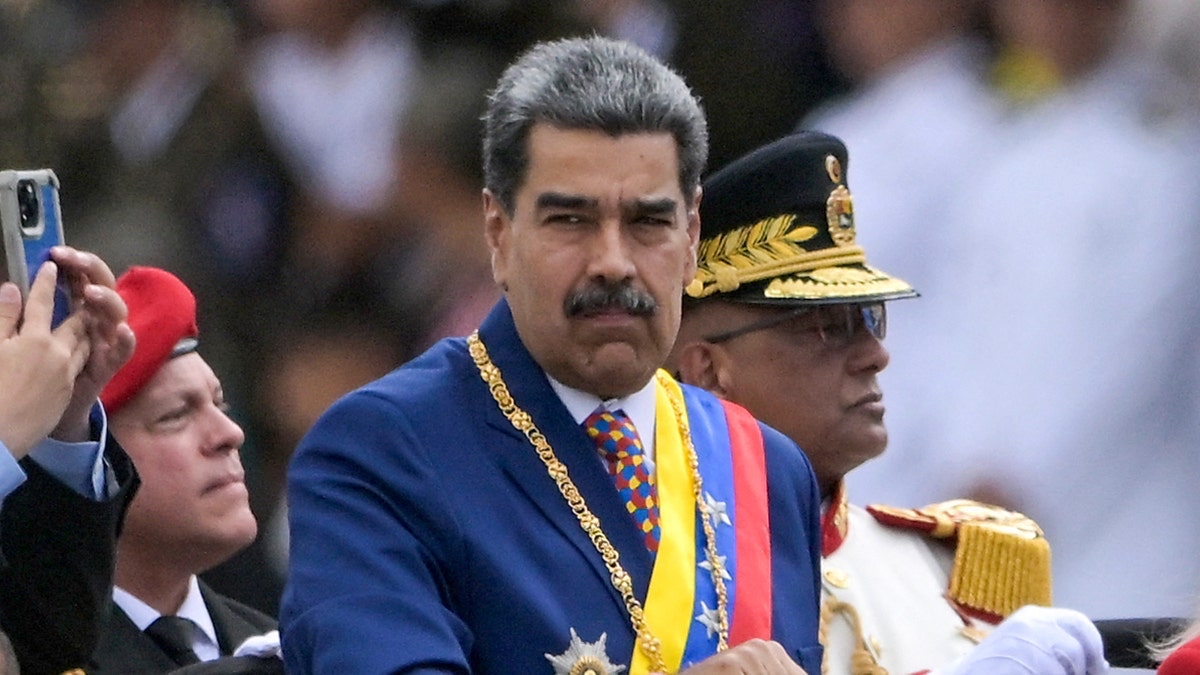
The United States carried out a major military operation against Venezuela in the early hours of Saturday, launching what former President Donald Trump described as a “large-scale strike” on the South American nation. Trump claimed that Venezuelan President Nicolás Maduro and his wife, Cilia Flores, were captured and flown out of the country as part of the action. In a post on his social media platform Truth Social, Trump said the operation was conducted “in conjunction with U.S. law enforcement” and called it a success. He announced he would hold a press conference later in the day at his Mar‑a‑Lago residence to provide further details.
Explosions and reports of military activity were reported across Caracas and other regions before dawn. Residents and social media posts described loud blasts, smoke, and low-flying aircraft over the capital and nearby states including Miranda, La Guaira, and Aragua. Videos circulating online showed bright flashes and plumes of smoke in the night sky. The Federal Aviation Administration (FAA) issued a ban on U.S. commercial flights over Venezuelan airspace due to the ongoing military activity, while the U.S. State Department warned Americans in Venezuela to shelter in place and avoid travel amid the volatile situation.
The Venezuelan government condemned the U.S. strikes as an act of “military aggression” and declared a national state of emergency. Vice President Delcy Rodríguez demanded that the United States provide proof of life for President Maduro and the First Lady, noting that their whereabouts remained unconfirmed. State media and officials described the action as a violation of Venezuelan sovereignty and called on the public and armed forces to mobilize against what they termed an “imperialist attack.”
Reactions from the international community are beginning to take shape. Some governments condemned the U.S. action and called for restraint and respect for sovereignty, while others urged de-escalation and the immediate release of any detained leaders. Allies of Venezuela have classified the strikes as unlawful and escalatory.
This move marks a dramatic escalation in U.S.–Venezuela relations, following months of rising pressure from Washington over allegations of drug trafficking and governance issues involving Maduro’s administration. The U.S. had previously increased military activity in the region and placed a large bounty on Maduro’s capture. Experts in international law note that an unapproved direct military intervention into Venezuela raises questions about sovereignty, legality under international law, and the requirement for Congressional authorization for acts of war. Humanitarian agencies have expressed concern about the safety of civilians in Caracas and across Venezuela, particularly with disruption to power, transportation, and basic services amid the ongoing military activity. Reports from local hospitals and emergency services remain sparse and chaotic.
As of this report, independent verification of Maduro’s capture and transfer abroad has not yet been confirmed by sources outside U.S. government statements. There are also no independently confirmed details of casualties or the exact nature of the U.S. military units involved. The situation remains highly fluid, with authorities and media monitoring events as they unfold.
 English