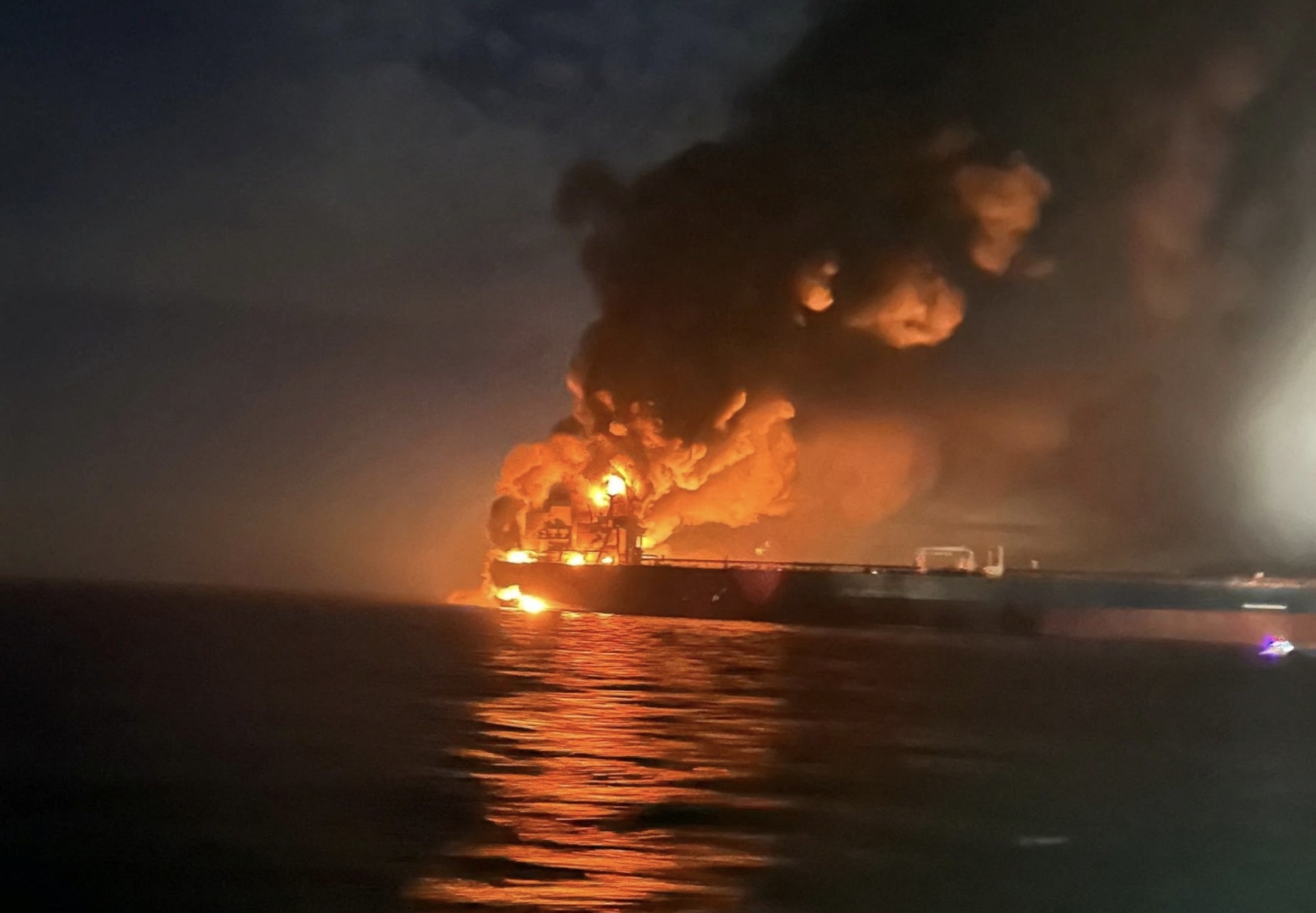
Ukraine says its naval drones struck two oil tankers belonging to Russia’s so-called “shadow fleet” in the Black Sea late on Friday and into Saturday, unleashing explosions and fires that wounded the vessels and prompted search-and-rescue operations by Turkish authorities. The attack, Kyiv says, forms part of an intensified campaign to disrupt ships that analysts say help Moscow skirt Western sanctions on Russian oil exports.
Ukrainian security sources and footage circulating on social media identified the two tankers as the Kairos and the Virat. Ukrainian officials said the strikes were carried out using domestically developed “Sea Baby” naval drones — small unmanned underwater vehicles packed with explosives — that approached and detonated against the tankers’ hulls. Videos released with the claim show fast-moving unmanned vessels and subsequent plumes of smoke, although independent verification of the footage is limited.
Turkish authorities said both vessels were struck in waters off Turkey’s coast and coordinated or carried out crew rescues. Turkish reports described one tanker (the Kairos) as catching fire and its crew of 25 being evacuated, while the Virat sustained damage that Turkish officials characterized as more limited. The incidents occurred within or near Turkey’s exclusive economic zone, prompting Turkish maritime and rescue responses.
One immediate consequence was disruption at a major oil export route: the Caspian Pipeline Consortium (CPC), a conduit for some Kazakh crude bound for global markets, temporarily halted or curtailed operations after a terminal mooring was damaged in a separate, possibly related incident, industry sources told Reuters. Kazakhstan’s authorities expressed concern about potential impacts to their exports.
The strikes mark a continuation of Kyiv’s campaign to target elements of Russia’s oil transport network that Western governments have labelled the “shadow fleet” — ageing tankers and vessels that change flags or employ opaque ownership structures to move Russian oil in defiance of sanctions imposed after the 2022 invasion. Western sanction lists and watchdog databases have tracked many such vessels; Kyiv and its allies say disabling them is aimed at shrinking revenue Moscow can use for the war.
Moscow had not issued a detailed public comment on the specific strikes as of Saturday evening, and independent verification of Ukrainian responsibility for both blasts remains limited. Russian state media and official lines frequently cast attribution differently in similar past incidents; analysts cautioned that confirmation from multiple independent sources is needed before final attribution.
The strikes underscore the growing role of unmanned naval systems in the conflict: Kyiv has increasingly deployed small surface and subsurface drones to strike maritime targets, while Russia has invested in counter-drone defenses in the Black Sea region. The incidents also raise legal and geopolitical questions because they happened close to Turkish waters, risking escalation and drawing Ankara into searches, rescues and investigations.

 English