
The United States and Australia on Monday formalized a wide-ranging partnership to secure supplies of rare earths and other critical minerals used in semiconductors, electric vehicles and advanced defense systems, signaling a major allied push to reduce reliance on China’s dominant processing industry. The leaders described the initiative as an $8.5 billion framework that will accelerate joint mining, separation and processing projects and direct prioritized supply to U.S. and Australian buyers.
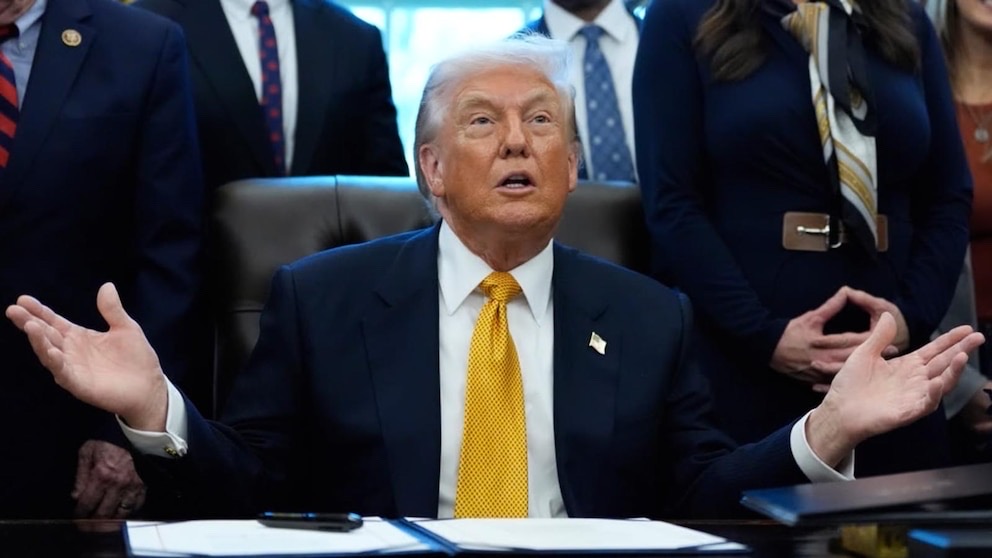
The document, titled the United States–Australia Framework for Securing of Supply in the Mining and Processing of Critical Minerals and Rare Earths, was issued by the White House after a meeting between President Donald Trump and Australian Prime Minister Anthony Albanese. It sets out a policy framework and commits the partners to coordinated investment and economic tools to build new capacity — including measures to provide at least $1 billion in financing to projects in each country within six months.
Practical financing steps were already on display: the U.S. Export-Import Bank issued Letters of Interest totalling more than $2.2 billion to back a slate of projects, and both governments flagged support for specific Australian ventures, including an Alcoa-backed gallium processing project in Western Australia and Arafura Rare Earths’ plans to produce rare earth oxides. Officials said the pipeline of projects could reach roughly $8.5 billion in total commitments. Markets reacted positively, with several Australian critical-minerals stocks rising after the announcement.
The deal is being cast by U.S. and Australian officials as a strategic counterweight to recent moves by Beijing to tighten controls on certain exports and to the long-standing reality that China controls the bulk of global rare-earth refining and magnet production. White House language stressed the partnership’s goal of building “diversified, liquid, fair markets” for minerals that underpin both commercial clean-energy technologies and defense supply chains.
Analysts and industry experts welcomed the agreement as an important start but warned it will not quickly overturn China’s entrenched market position. China has decades of processing advantage and large-scale downstream capacity; building equivalent integrated supply chains — from mine to separated oxides to magnets and finished components — will require sustained investment, new processing plants and time. Some analysts called the framework “a good start” but urged caution that meaningful competition will take years, not months.
Beyond economics, the agreement has geopolitical overtones. By prioritizing deliveries to U.S. and Australian buyers and creating financing and market tools to stabilize prices, the U.S. and Australia aim to reduce vulnerability to export curbs or market distortions. But commentators flagged risks of escalation with Beijing and noted that Australia currently lacks large-scale downstream manufacturing for many rare-earth-intensive products, meaning some processed materials may still need to be shipped to third-country partners for final manufacturing.
The framework sets a six-month timetable for initial financing and project steps, with companies and governments now expected to finalize project structures, feasibility studies and joint ventures. Observers will watch whether the measures translate into concrete new processing capacity in 2026 and beyond — and whether allied partners such as Japan, South Korea and the U.K. deepen collaboration to scale alternatives to China’s supply chain.


 English