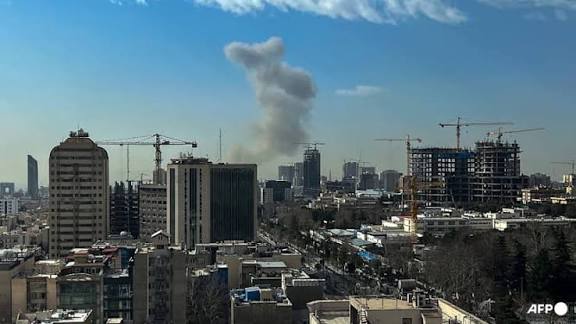
In the early hours of February 28, 2026, the United States and Israel carried out coordinated military strikes against targets inside the Islamic Republic of Iran, marking one of the most serious escalations in tensions between the West and Tehran in decades. The operation, described by officials in both Washington and Jerusalem as a major and deliberate combat action, involved air and missile strikes directed at key Iranian military and strategic infrastructure, particularly in and around the capital, Tehran, and other major cities. Explosions were heard across Tehran as the strikes unfolded, and air-raid sirens were reported in both Israel and Iran as citizens reacted to the unfolding crisis.
Israeli government sources confirmed that the offensive had been planned months in advance with extensive coordination with the United States, and the decision to act on this date was finalised after prolonged discussions between senior defence and national security officials in both countries. U.S. and Israeli statements made clear that the strikes were intended to weaken what they described as imminent threats posed by Iran’s nuclear and ballistic missile programmes, though Tehran has strongly rejected such claims.
In statements released after the attacks, Israeli officials described the operation as necessary to protect the security of the State of Israel, and U.S. leaders characterised the mission as a justified response to what they alleged were dangerously advancing Iranian capabilities. Iranian authorities acknowledged that explosions were heard in Tehran and other locations and announced that the nation’s airspace had been closed in response to the strikes. At the time of reporting, Iranian casualty figures and the full extent of damage to infrastructure were still being assessed.
The strikes appear to have targeted a range of military and strategic sites, including government facilities and installations linked to Iran’s defence and nuclear programmes, though specific details are limited amid ongoing military activity and operational security constraints. The sense of alarm among residents in Tehran was palpable as sirens sounded and people sought shelter following the loud detonations that echoed across parts of the city.
This major offensive comes against a backdrop of longstanding and deep-rooted tensions between Tehran, Washington and Jerusalem. Disputes over Iran’s nuclear ambitions, its ballistic missile development, and its regional influence have fuelled diplomatic standoffs and sporadic clashes for years. Earlier efforts in 2026 at diplomatic negotiations aimed at addressing concerns over missile and nuclear limits failed to produce an agreement acceptable to the U.S. and Israel, contributing to the rising strain that ultimately culminated in these strikes.
International reactions to the news of the strikes were swift, with governments around the world closely monitoring the situation and issuing travel advisories for their citizens in the broader Middle East region. Analysts warned of the potential for retaliatory actions by Iran, heightening fears of broader regional instability. In Israel, emergency alerts and civilian warnings signalled the seriousness of the situation, while Iranian officials vowed a strong response to what they condemned as aggression against their country.
As the situation continues to develop, world leaders and diplomatic envoys are engaged in urgent discussions to prevent the conflict from expanding further. With the region on heightened alert, the future trajectory of this confrontation remains uncertain, and the global community watches closely for signs of escalation or de-escalation in the coming days.

 English