
On Thursday, simmering tensions between Thailand and Cambodia erupted into a deadly border battle. Thai authorities have confirmed the deaths of at least 12 Thai nationals, the majority of whom are civilians. It is unclear how many people have died on the Cambodian side. Both sides are blaming each other for the escalation, which apparently began with shooting across the border. Thailand has accused Cambodia of firing rockets when Bangkok launched air attacks on Cambodian military sites. So, how did we get here, and where is it going?
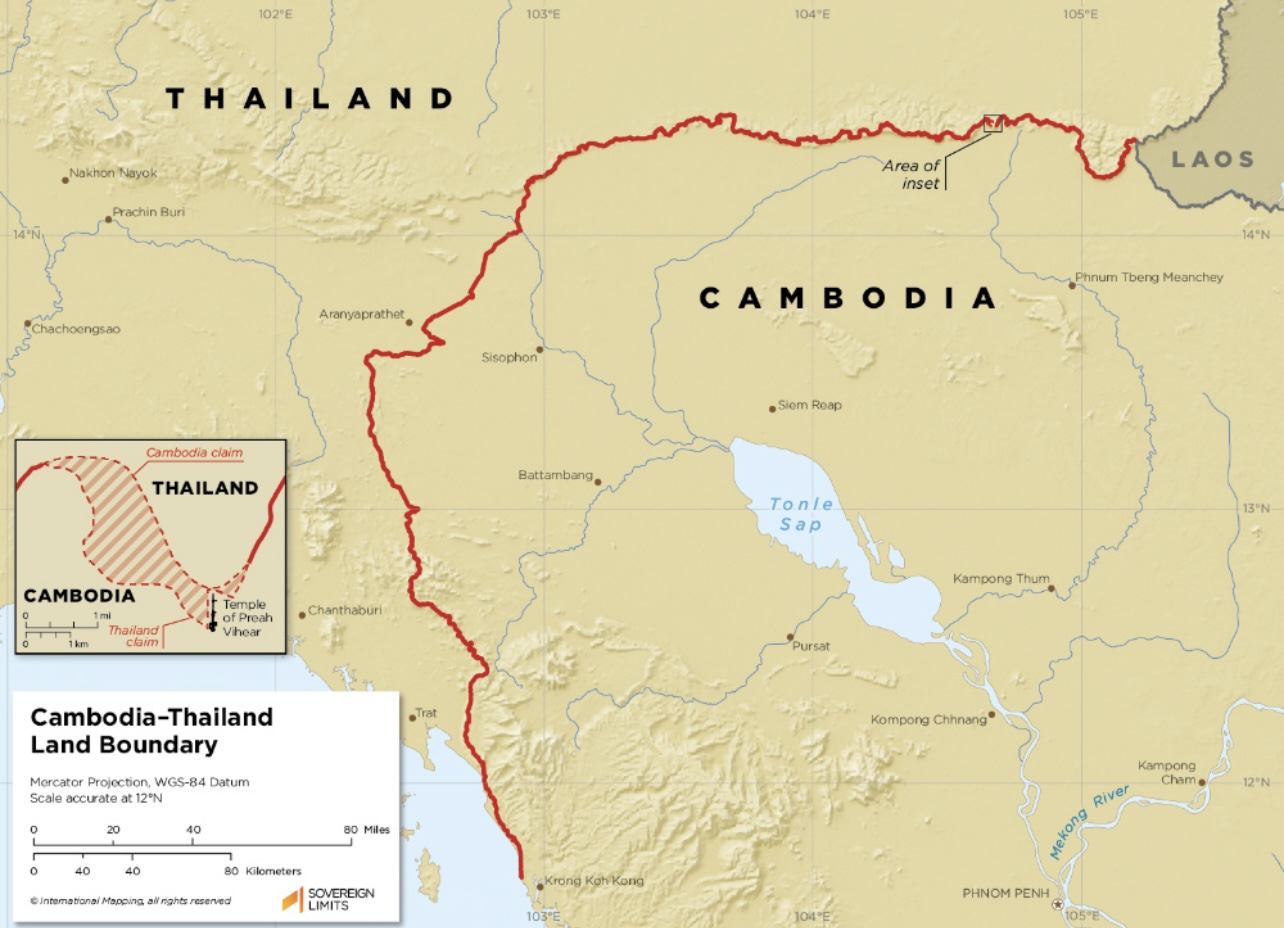
This isn’t a recent dispute. In actuality, the conflict between Thailand and Cambodia dates back more than a century, when the two countries’ borders were set following the French occupation of Cambodia. Things officially became hostile in 2008, when Cambodia attempted to register an 11th-century temple in the disputed territory as a Unesco World Heritage Site, prompting a furious protest from Thailand. Over the years, there have been intermittent skirmishes in which military and civilians have died on both sides. The current tensions erupted in May, when a Cambodian soldier was slain in a skirmish. This brought bilateral ties to their lowest levels in over a decade. In the past two months, both countries have imposed border restrictions on one another. Cambodia banned imports from Thailand such as fruits and vegetables, and stopped importing power and internet services.
Both countries have also strengthened troop presence along the border in recent weeks.
What actually happened on Thursday?
Thailand and Cambodia have presented various accounts of what occurred. Thailand’s National Security Council (NSC) alleges that immediately after 07:30 local time (00:30GMT) on Thursday, Cambodia’s military used drones to monitor Thai forces near the border. Shortly after, Cambodian soldiers carrying rocket-propelled grenades gathered near the border. forces on the Thai side attempted discussions by screaming, but were unsuccessful, according to the NSC spokesman, who added that Cambodian forces started fire about 08:20, causing the Thai side to respond.
Thailand accuses Cambodia of using heavy weaponry, such as BM-21 rocket launchers and artillery, to damage residences and public buildings along the Thai border, including a hospital and a gas station. Meanwhile, Cambodia reports that Thai forces started the confrontation around 06:30, when they broke a previous agreement by moving on a Khmer-Hindu temple near the border and erecting barbed wire around its base. Thai military then deployed a drone just after 07:00, firing bullets “into the air” at around 08:30, according to Maly Socheata, a spokesperson for Cambodia’s Ministry of National Defence.
According to Socheata, Thai soldiers “pre-emptively” opened fire on Cambodian forces at 08:46, forcing them to exercise their right to self-defence. Socheata also accused Thailand of deploying excessive troops, using heavy weapons, and conducting air strikes on Cambodian territory.
Will this turn into a complete war? Thailand’s acting premier, Phumtham Wechayachai, stated that the country’s dispute with Cambodia remains “delicate” and must be handled with caution and in accordance with international law. Cambodian Prime Minister Hun Manet stated that his country wishes to resolve the conflict amicably and that it has “no choice” but to “respond with armed force against armed aggression”. While there have been serious exchanges of fire in the past, they have de-escalated rather rapidly, and BBC correspondent Jonathan Head believes this will happen again. However, he adds that both countries currently lack leadership with the strength and courage to back down from this confrontation.
Is it safe to travel to Thailand or Cambodia?
The conflict is currently fairly confined, and the British Foreign Office has not issued a specific travel recommendation as of the time of writing. However, it has already encouraged tourists to exercise “extra care” in the area following the closure of the border crossings in recent weeks – “especially at tourist destinations such as the Preah Vihear temple, the Ta Kwai temple, and the Ta Muen Thom temple”.
Meanwhile China has urged its citizens in Cambodia to avoid the Thai border.


 English