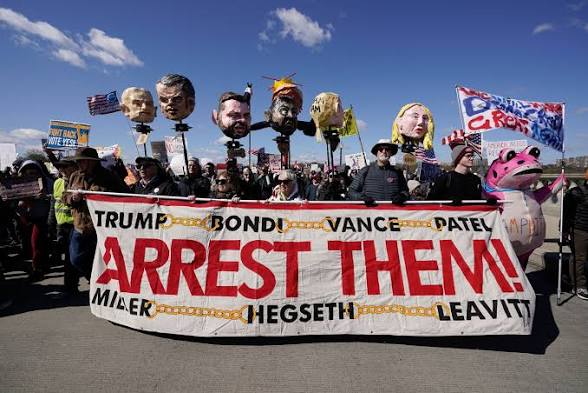
Large crowds have taken to the streets across the United States and in cities abroad as part of the “No Kings” protest movement, a coordinated wave of demonstrations opposing the policies of Donald Trump. The protests, held on 28 March 2026, are being described by organisers and media outlets as one of the largest single-day protest movements in recent American history.
According to multiple reports, more than 3,000 rallies were staged across all 50 states, with participation reaching into the millions. Some estimates suggest that over eight million people joined demonstrations worldwide, with events also taking place in cities such as Paris, Tokyo and Sydney. These protests mark the third major mobilisation of the “No Kings” campaign, which has grown rapidly since its emergence in 2025.
Major urban centres saw particularly large turnouts. Tens of thousands marched in New York City, while the flagship rally in Minneapolis–Saint Paul drew crowds in the hundreds of thousands, making it one of the largest protests in the state’s history. Demonstrations were also reported in cities including Washington, D.C., Los Angeles, Dallas and Philadelphia, as well as in smaller towns, reflecting the movement’s broad geographic reach.
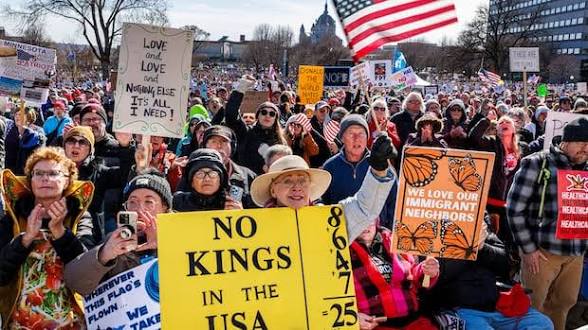
Protesters voiced opposition to a range of issues associated with the Trump administration, including immigration enforcement policies, economic concerns, and the ongoing war in Iran. Many demonstrators framed their participation as a defence of democratic institutions, expressing fears of increasing authoritarianism and executive overreach. Signs, speeches and performances at rallies highlighted themes such as civil rights, voting protections and anti-war sentiment.
High-profile figures added visibility to the movement, with politicians, activists and celebrities attending or speaking at events. Senator Bernie Sanders, actor Robert De Niro and activist groups such as Indivisible were among those linked to the protests, while musician Bruce Springsteen performed at the Minnesota rally, drawing further attention to the demonstrations.
While the majority of protests were peaceful, some locations reported tensions. In Los Angeles, clashes between demonstrators and law enforcement led to arrests, and there were isolated confrontations with counter-protesters in other cities. Despite this, organisers emphasised nonviolence and described the events as part of a longer-term movement aimed at sustained political activism.
The White House and some political opponents dismissed the protests, questioning their significance and attributing them to organised political networks. However, analysts note that the scale and spread of the demonstrations indicate growing civic mobilisation ahead of upcoming elections, with the “No Kings” movement positioning itself as a continuing force in US political discourse.


 English