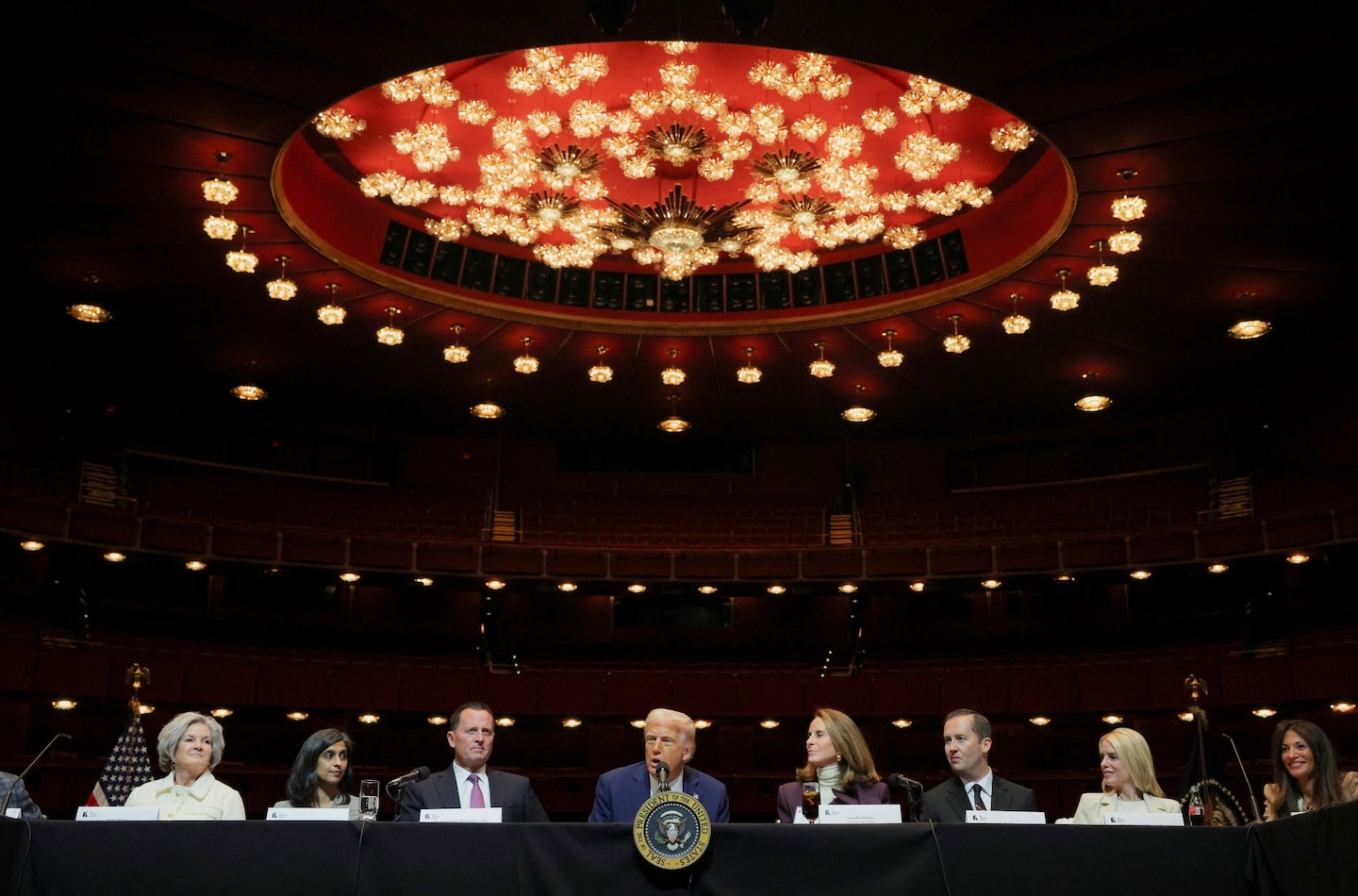
A Democratic member of Congress has filed a lawsuit seeking to remove former President Donald Trump’s name from a facility associated with the John F. Kennedy Center for the Performing Arts, arguing that Trump’s actions and rhetoric are incompatible with the institution’s mission and values, according to multiple U.S. news reports.
The suit, filed in federal court this week, was brought by Rep. [name reported by outlets], who contends that honoring Trump at a premier national arts institution undermines the Kennedy Center’s role as a symbol of artistic freedom, democratic ideals, and civic unity. The lawmaker argues that Trump’s record — including his attacks on democratic institutions and repeated criticism of artists and cultural bodies — disqualifies him from such recognition.
According to Reuters and The Washington Post, the case centers on the use of Trump’s name in connection with a space or designation linked to the Kennedy Center, which was established by Congress as a living memorial to President John F. Kennedy. The lawsuit claims that federal law and the center’s governing statutes require it to remain politically neutral and consistent with Kennedy’s legacy.
Trump allies and Republican critics have dismissed the lawsuit as politically motivated. In statements reported by Fox News and The Hill, they argue that naming decisions are lawful, that Trump served as president of the United States, and that attempts to erase his name amount to partisan “cancel culture.”
The Kennedy Center itself has sought to distance the institution from the political dispute. A spokesperson told CNN and Associated Press that the center does not comment on pending litigation and emphasized that it remains focused on its artistic programming and educational mission rather than partisan debates.
Legal experts quoted by Politico note that the case could face significant hurdles. Courts have traditionally granted broad discretion to governing boards and federal authorities in naming decisions, and plaintiffs may struggle to show direct legal harm. However, they add that the lawsuit highlights growing tensions over how public institutions reckon with the legacy of polarizing political figures.
The case comes amid broader national debates over monuments, building names, and honors associated with controversial leaders. While previous disputes have often focused on historical figures, analysts say this lawsuit is unusual because it targets a living former president who remains a dominant force in U.S. politics.
No hearing date has yet been announced. If the court allows the case to proceed, it could set a precedent for future legal challenges over naming rights and political symbolism at federally linked cultural institutions.

 English