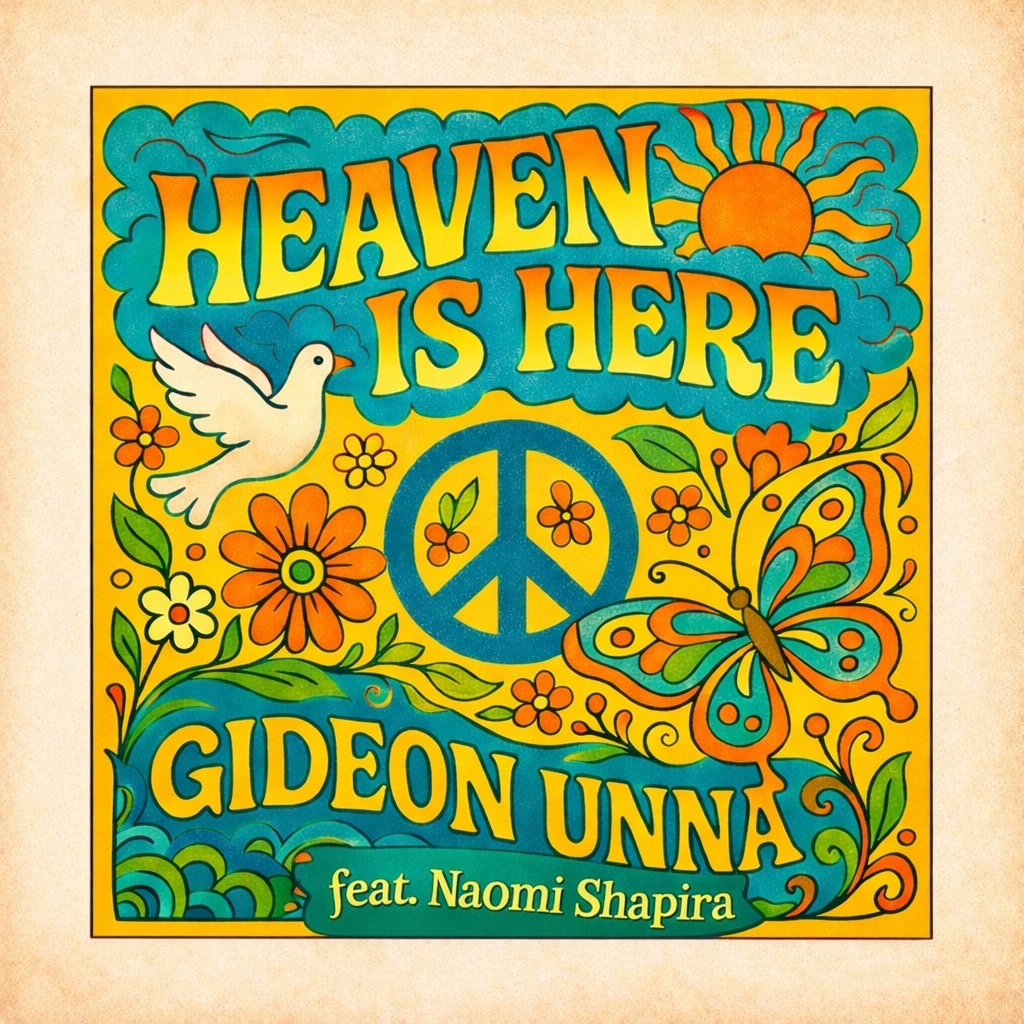
Gideon Unna’s “Heaven Is Here” featuring Naomi Shapira is a song built around a perspective rather than a spectacle. The single encourages listeners to reconsider the way they experience ordinary life. Its central belief is beautifully straightforward: paradise may not be a distant destination but a state of awareness, found in moments of connection, nature, love and gratitude. That idea gives the song a calm sense of purpose and places Unna’s songwriting within a broader search for meaning.
Unna’s artistic journey provides useful context for understanding the release. A musician and songwriter from Kibbutz Ein Carmel, he draws inspiration from spirituality, traditional melodies and the emotional warmth of classic popular music. His admiration for 1960s harmony groups, particularly The Mamas & the Papas and The Carpenters, contributes to the song’s bright and timeless sensibility. Scott McKenzie’s “San Francisco” is another significant influence, especially its association with idealism, openness and the belief that a more beautiful way of living is possible.
At the centre of the release is a message about consciousness. Unna views the idea of the biblical Fall not only as a religious event but also as a possible change in how humanity perceives the world. From that perspective, paradise may not have disappeared completely; perhaps people simply stopped seeing it. “Heaven Is Here” develops this thought into an invitation to become more awake to the present. Naomi Shapira’s involvement strengthens that invitation by bringing an emotional perspective to the song, allowing its spiritual ideas to remain warm and human rather than abstract.

The song also establishes an engaging dialogue with one of the most recognisable philosophical songs of the modern era. John Lennon’s “Imagine” asks listeners to envision a world without heaven, while Unna turns the idea around and suggests that heaven could already surround us. It is a striking contrast, but the message remains gentle rather than confrontational. “Heaven Is Here” ultimately celebrates appreciation, compassion and human connection, encouraging listeners to live with greater awareness. Its most lasting idea may also be its simplest: before searching for paradise elsewhere, take a closer look at where you are now.


 English