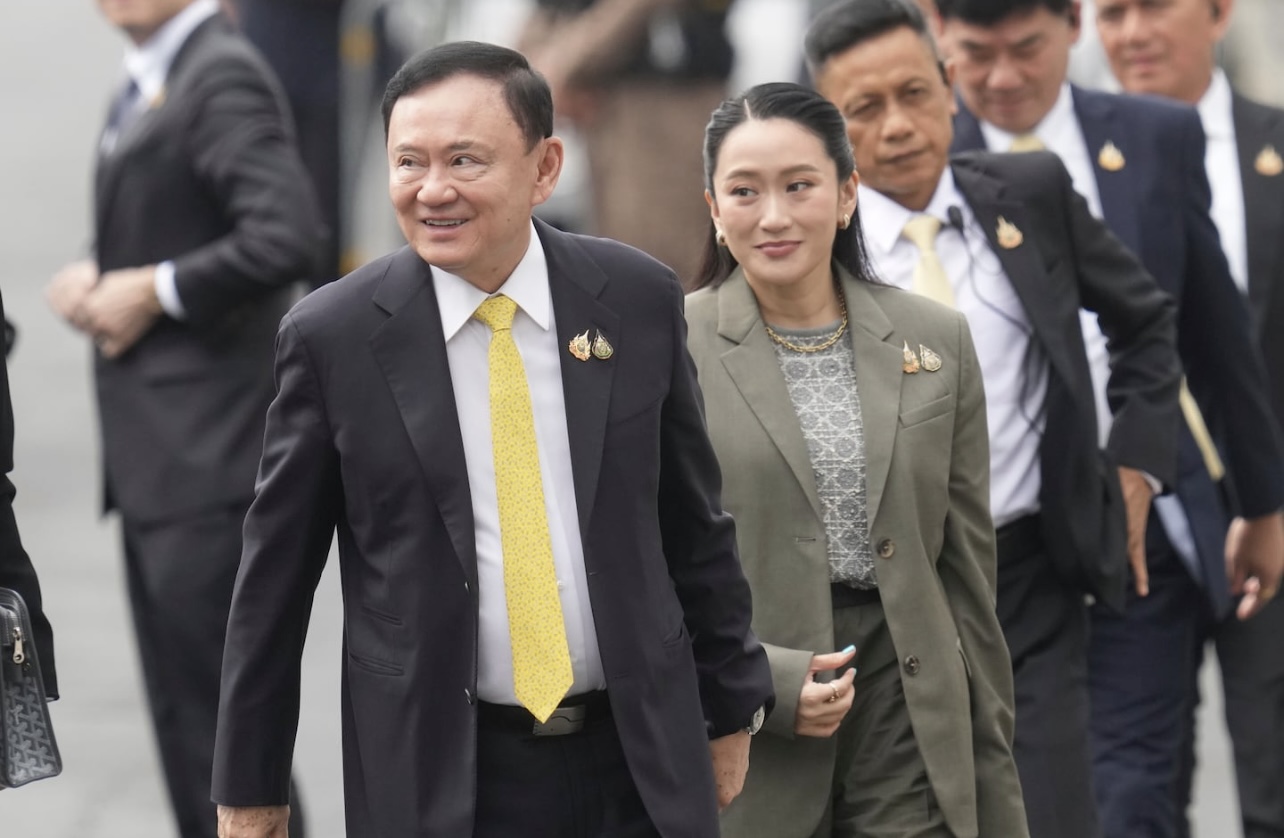
Thailand’s Supreme Court has sentenced former prime minister and billionaire Thaksin Shinawatra to one year in prison, a striking development for the 76-year-old political heavyweight.
Thaksin, a deeply polarizing figure, led Thailand from 2001 until his ouster in a 2006 military coup. After 15 years in self-imposed exile, he returned in 2023 and was handed an eight-year sentence for corruption, abuse of power, and conflicts of interest. However, he avoided a prison cell, instead residing in a private suite at Bangkok’s Police General Hospital, citing chest pain, high blood pressure, and low oxygen levels.
King Maha Vajiralongkorn later cut his sentence to one year, and Thaksin was released on parole after six months in February 2024. But on Tuesday, the Supreme Court ruled his extended hospital stay was illegitimate and ordered him to serve time at Bangkok Remand Prison. Footage from Reuters showed a motorcade believed to be transporting him to the facility.
The arrangement reignited suspicions that Thaksin had benefited from preferential treatment. Analysts have long speculated that his 2023 return was tied to an understanding with Thailand’s powerful royalist and conservative elites, potentially involving leniency or a pardon. His comeback notably coincided with his family’s party reclaiming power, though Thaksin has denied any such deal.
In its ruling, the court concluded his health conditions could have been managed outside the hospital and that he unfairly benefited from avoiding prison. Earlier this year, Thailand’s medical council suspended two doctors accused of falsifying records to keep him in hospital, while a prison doctor received a warning for mishandling his case.
Responding on social media after the verdict, Thaksin said he accepted the decision:
“Today I choose to look forward, letting all past matters come to a resolution. Though I may lack physical freedom, I still have the freedom of thought for the benefit of the nation and people.”
Outside the court, Thaksin’s daughter and former prime minister Paetongtarn Shinawatra told reporters that her father and family were “keeping their spirits up.” She added that their Pheu Thai Party would continue its political role as the opposition.
“I feel very sad today,” said Oy, 64, who gave only her nickname while holding back tears. She credited Thaksin’s universal healthcare policy with saving her husband’s life by enabling him to undergo heart surgery.
A setback for the Shinawatra dynasty
Thaksin was present in court for the ruling. Shortly afterward, he boarded his private jet for Dubai, where he spent much of his exile, officially for a medical check-up. The trip immediately sparked speculation that he might be fleeing the country.
This verdict marked the last of three legal cases involving the Shinawatra family, which has been at the heart of Thailand’s often turbulent politics for more than two decades.
Thaksin himself recently avoided conviction in a lese majeste case that could have carried a 15-year prison sentence. His daughter Paetongtarn was less fortunate — she was removed from office by the Constitutional Court just two weeks earlier over a leaked phone call with Cambodia’s former leader that was deemed a breach of ethics.
Since 2001, candidates aligned with Thaksin have won nearly every election, cementing one of Thailand’s most powerful political dynasties. Yet the family has faced repeated pushback from the country’s entrenched establishment, backed by both the military and the courts, which have toppled or obstructed Shinawatra-led governments.
Even in exile, Thaksin continued to exert political influence. His sister Yingluck served as prime minister until her removal by court order, followed by a military coup in 2014. His brother-in-law also briefly held the premiership during Thaksin’s absence.
Thailand now stands at a pivotal moment. For much of the past 20 years, power alternated between Shinawatra-aligned governments and military rule. That era shifted last week when Pheu Thai was ousted from government.
Anutin Charnvirakul, a seasoned political figure known for leading Thailand’s cannabis legalization push as interior minister, won a parliamentary vote to succeed Paetongtarn as prime minister the third to take office in just two years. His government officially assumed power on Sunday after receiving royal approval from King Vajiralongkorn.

 English