
Ellabell, Georgia —When Luz Dary Suárez warned her husband by phone about a sudden immigration raid unfolding at the Hyundai plant in southeast Georgia, he told her not to worry. “All my papers are in order, I have no reason to rush,” he reassured her.
Suárez, a Colombian migrant, had heard word of the large-scale enforcement action and feared the worst. Her husband, confident in his valid U.S. work permit, believed he would be safe.
Yet he was taken into custody along with many others. He now remains detained by immigration authorities, awaiting a review of his case. Workers and families say the raid swept up people indiscriminately, regardless of their legal status.
More than 500 federal, state, and local officers took part in the Ellabell operation, which resulted in the arrest of 475 workers about 25 miles west of Savannah. The unprecedented action rattled the small town and marked the largest workplace immigration raid carried out under the Trump administration.
ICE said its agents interviewed every worker to verify legal status, releasing some on the spot. But families said that even employees with valid permits were taken into custody.
Luz Dary Suárez, who came to the U.S. nearly two years ago with her partner and two children, said her own asylum case is still pending. Her husband who asked not to be fully identified claimed agents ignored his documents and detained him anyway.
Another Colombian migrant, Santiago, shared a similar story. His wife Camila, originally from Venezuela, was also swept up in the raid despite his insistence that her paperwork was in order.
Camila told her husband that during a break at the plant, ICE agents suddenly showed up and began making arrests. “They came in all at once, detaining everyone without distinction,” she recounted.
Santiago, who previously worked at the facility and is familiar with its hiring process, He said that applicants are required to provide legal documents before they can begin working there.
Workers and their families say that during the raid, immigration officers disregarded valid documents. Santiago recalled how his wife, Camila, explained that when agents processed each detainee, they asked for paperwork. But even after she handed over her documents, the officer marked her as having “nothing” and sent her straight to the detention bus.
That story lines up with the experience of Mauricio, another migrant who requested anonymity. He said his wife and her brother felt secure, believing their papers would protect them. Instead, when ICE agents stormed in, “they didn’t accept any documents”
Together, these accounts paint a picture of a raid that swept up workers indiscriminately, leaving families stunned and questioning whether legal status offered any protection at all.
Mauricio said that even when workers’ papers were checked, officers dismissed them outright. “They were told nothing was valid and that everyone would be arrested,” he recalled.
CNN has asked Immigration and Customs Enforcement (ICE) to respond to those claims and to clarify how documents were handled during the raid, but the agency has not yet provided comment.
Hyundai, meanwhile, sought to distance itself from the arrests. A spokesperson said the company does not believe any of those detained were directly employed by Hyundai Motor Company. In a statement issued Friday, the automaker said it “is committed to full compliance with all applicable laws and regulations, including employment verification and immigration requirements.” Hyundai also pledged to conduct an internal review to ensure that its contractors and subcontractors are following the law.
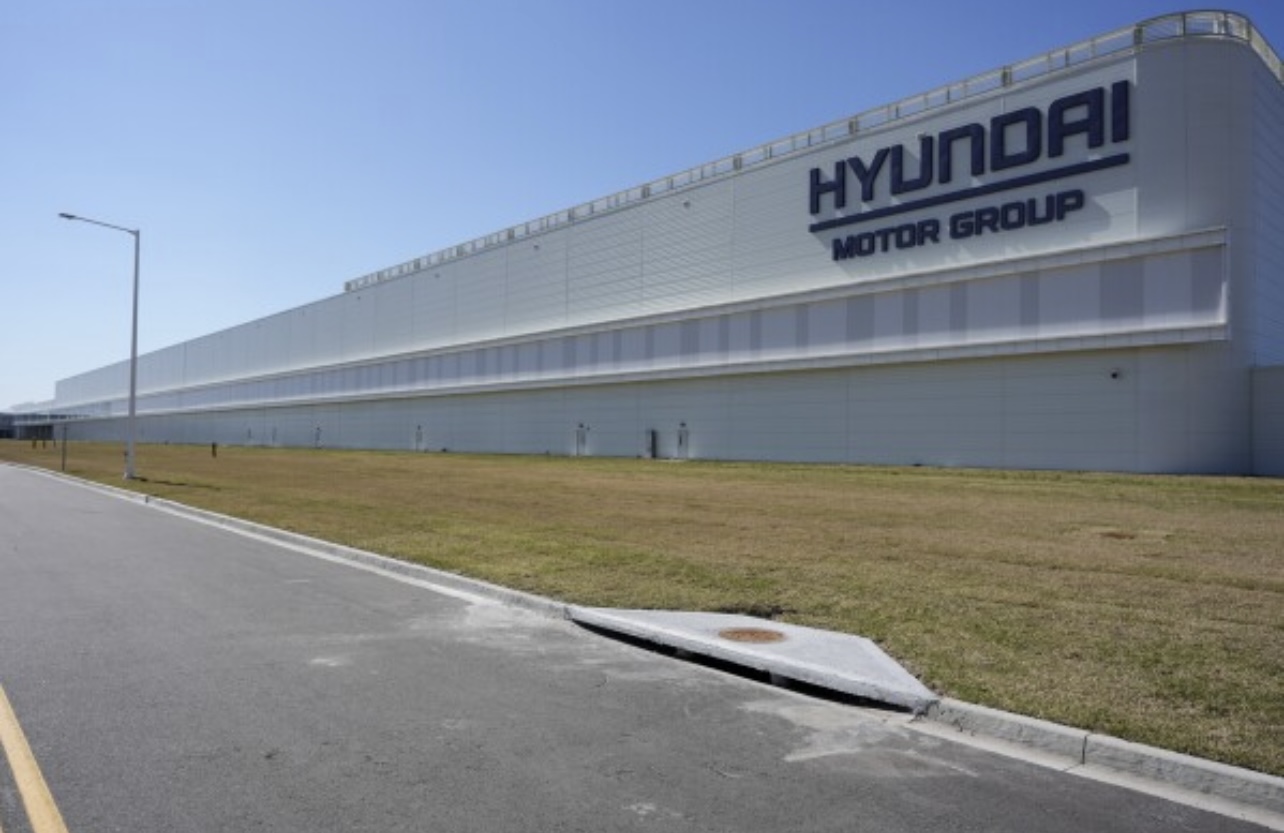
A plant employee mentioned that during the inspection, that officers gave some workers a piece of paper permitting them to leave the plant.
A video footage showed heavily armed officers in masks directing workers in helmets and safety gear to line up as the plant was swept during the raid. Some employees attempted to run, though many were quickly detained.
Mauricio said his wife stayed calm, believing her work permit would protect her. “She was devastated when they told her it meant nothing,” he recalled.
Steven Schrank, special agent in charge of Homeland Security Investigations in Georgia and Alabama, stated that all 475 people taken into custody were in the U.S. unlawfully some having crossed the border without authorization, others entering on visa waivers that barred them from working, and others overstaying their visas.
Santiago, however, insisted that claim was “completely untrue.” He pointed to his wife’s case, and said he personally knew several other workers with valid permits who were also arrested.
Most of those detained were South Korean nationals, according to Schrank, who said he did not have a detailed breakdown of all nationalities. South Korea’s Foreign Affairs Minister, Cho Hyun, later confirmed that more than 300 of those arrested were South Korean citizens.
Santiago estimated that 70 to 80 percent of the plant’s workforce was South Korean. “They managed almost everything. About 70% of the communication was in Korean, 20% in English, and only 10% in Spanish,” he explained, adding that many instructions and blueprints were written only in Korean, creating barriers for others. Mauricio added that “it was always a mystery” why so many Koreans were employed at the site.
James Rim, president of the Korean-American Association of Southeast Georgia, said many of the Koreans at the facility were either construction workers or specialized technicians. “We just want their cases handled properly, within the law, and with dignity,” he emphasized.
For families like Suárez’s, the raid has left not only uncertainty but heartbreak. She fled Colombia after threats followed her niece’s killing, only to face new fears in the U.S. “It feels unjust you try to do everything right, work hard, protect your family. We did things right. Yet even then, I’m still at risk, and children are left behind,” she said, holding her two children close. To shield them, she tells them their father is simply “away traveling.”
Mauricio’s story is similar. His wife, displaced years ago by guerrilla violence in Colombia, has never been apart from their children until now. Phone calls from detention are short, he said, because she can’t stop crying. “She’s devastated they treat her like a criminal,” he said quietly. Yet he fears visiting her could put him at risk of arrest as well. “If that happens, my children would be left with no one.”
The aftermath of the raid continues to ripple through families and the wider immigrant community, leaving many to wonder if safety and stability reasons they came to the United States remain out of reach.
Santiago said he has no family in the U.S. and intends to wait as long as he can for a decision in his wife’s case. While he insists he does not regret coming to America, he admitted it may be “time to leave.”
“We didn’t come here to be hunted down,” he said. “We don’t live off the government we live from our work. To step outside and be treated like this, it shouldn’t be this way.”
 English