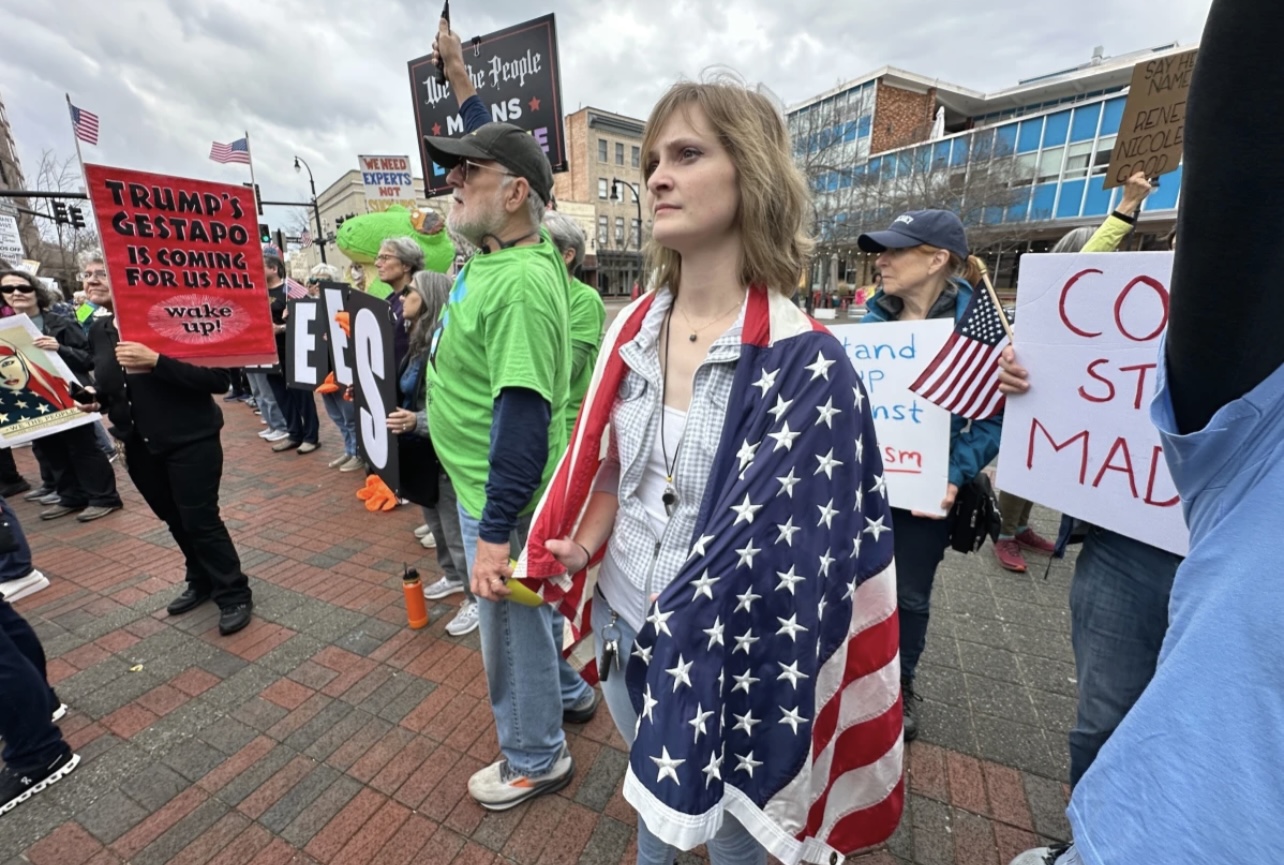
In Minneapolis over the weekend, thousands of people took to the streets protesting against U.S. Immigration and Customs Enforcement (ICE) following the controversial fatal shooting of 37-year-old Renée Nicole Good by an ICE agent earlier this week. The demonstrations drew one of the largest crowds seen in the city in recent months, with police estimating tens of thousands of participants marching through central streets despite cold winter conditions.
Protesters began gathering at Powderhorn Park in south Minneapolis before moving along Lake Street and other major thoroughfares, chanting slogans critical of ICE and calling for an end to large-scale immigration enforcement operations, which many view as heavy-handed and harmful to immigrant communities. Many marchers paused at the site near Portland Avenue where Good was shot and killed on Wednesday, paying tribute and expressing outrage at what they describe as an unjustified killing.
While the majority of demonstrations remained peaceful, tensions escalated in some areas. On Friday night, clashes between protesters and law enforcement outside a hotel thought to house ICE personnel led to confrontations in which objects such as ice and snow were thrown at police. Authorities reported that at least 29 people were arrested and one police officer suffered minor injuries during the weekend unrest. Local officials emphasized that arrests were focused on those who engaged in unlawful behavior.
City leadership, including Mayor Jacob Frey and Police Chief Brian O’Hara, urged demonstrators to express their views peacefully and stressed that law enforcement would respect the right to protest while acting to prevent damage to property and protect public safety. Frey highlighted the difficult balance between upholding constitutional rights and maintaining order amid heightened emotions over the shooting.
The protests in Minneapolis were part of a wider wave of demonstrations occurring across the United States this weekend, with related marches and rallies reported in cities such as Boston, Austin, and New York. Organizers — including civil rights groups and immigrant advocacy networks — said coordinated events were planned in more than 1,000 communities nationwide, calling attention not only to the Minneapolis shooting but also to broader concerns about federal immigration enforcement practices.
Federal authorities, including the Department of Homeland Security, have defended the actions of the ICE agent involved in the shooting, describing it as an act of self-defense, though local leaders and protest organizers dispute that account and are calling for greater transparency and accountability. The incident has reignited national debates over immigration policy, enforcement tactics, and the role of ICE in U.S. communities.


 English